
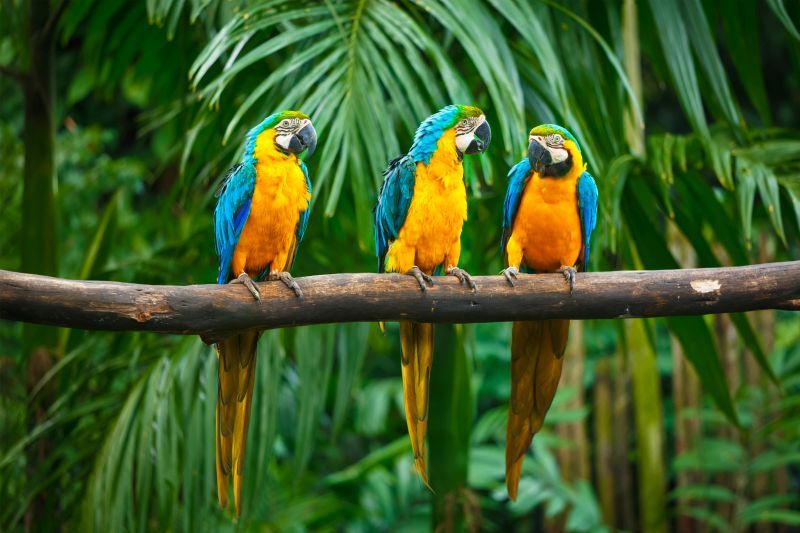
Welcome to a journey through the lush rainforests, home to some of the most stunning birds on the planet. As birdwatchers, we relish the opportunity to glimpse these creatures in their natural habitats.
Rainforests, teeming with life, offer a vibrant backdrop for the diverse avian population that thrives within. From the brilliant plumage of parrots to the majestic flight of eagles, each bird brings a unique story to the ecosystem.
Here, we explore ten breathtaking birds that not only capture our imaginations but also play crucial roles in maintaining the balance of these rich environments. Let’s dive into the colorful and captivating world of rainforest birds.
1. Scarlet Macaw
Habitat and Range
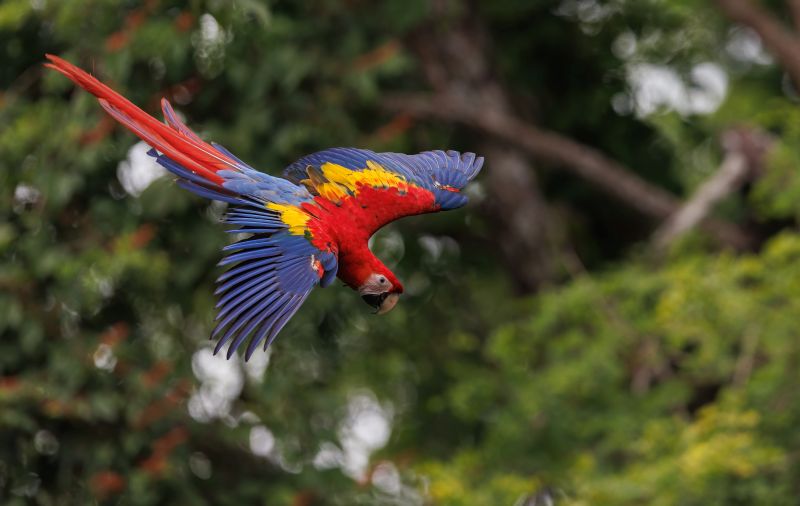
The Scarlet Macaw, a symbol of tropical beauty, flourishes in the dense rainforests of Central and South America. These birds prefer the humid canopy layer where they can nest and roost high above the forest floor, safe from many predators.
Physical Characteristics
Bright red feathers define the Scarlet Macaw, complemented by blue and yellow along the wings. A strong, curved beak enables it to crack nuts and seeds, making it a vibrant spectacle among the greenery.
Conservation Status
Despite their popularity, Scarlet Macaws face threats from habitat destruction and the illegal pet trade. Initiatives to safeguard these magnificent birds are currently in progress through various conservation programs and protected areas.
2. Harpy Eagle
Habitat and Range
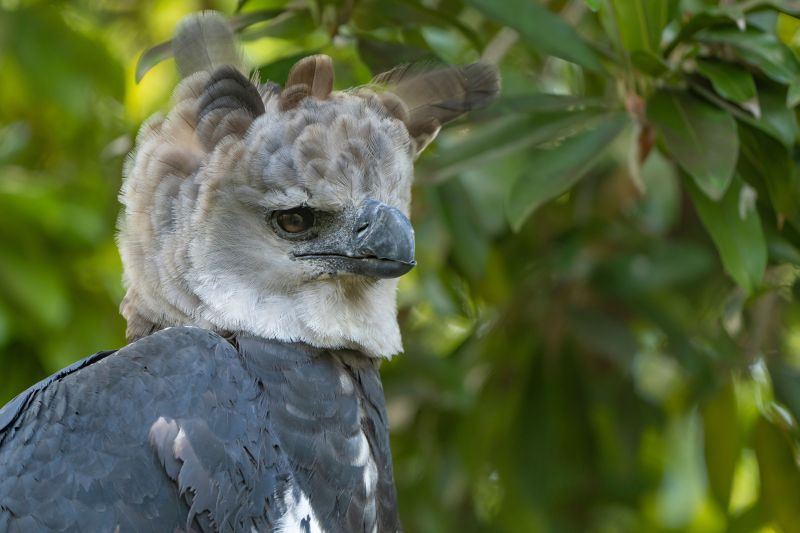
The Harpy Eagle reigns as one of the most powerful birds of prey in the rainforest biome. It resides primarily in the upper canopy of neotropical rainforests from Mexico to northern Argentina.
Physical Characteristics
This eagle possesses an impressive wingspan and is known for its striking gray feathers and bold black bands. Its large, hooked beak and powerful talons make it a formidable hunter.
Conservation Status
The Harpy Eagle is critically endangered in many parts of its range due to deforestation and loss of prey. Conservation initiatives focus on habitat preservation and education to support this apex predator.
3. Resplendent Quetzal
Habitat and Range
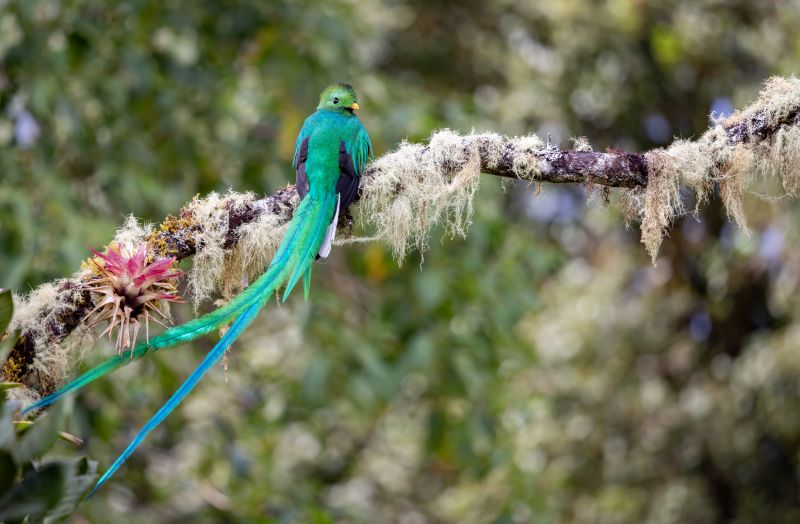
The Resplendent Quetzal is a mysterious creature that inhabits the cloud forests stretching from southern Mexico to western Panama in Central America. These birds favor high altitudes and dense, moist forests rich in fruit-bearing trees.
Physical Characteristics
The Quetzal is famous for its brilliant plumage. Males sport a vivid green back, red breast, and striking tail feathers that can be over a meter long. Both sexes have a distinctive crest on the head and a soft call.
Conservation Status
Habitat destruction threatens the Quetzal, primarily due to logging and land clearing for agriculture. Protective measures are critical to preserve the mystical aura of these forests and the creatures that inhabit them.
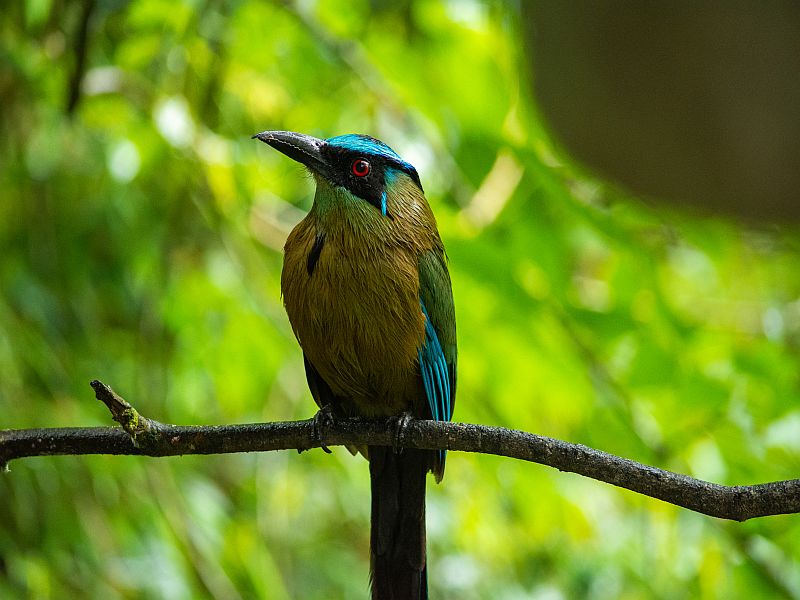
4. Amazonian Motmot
Habitat and Range
The Amazonian Motmot is a colorful resident of the lowland rainforests across northern South America. These birds thrive in the understory layer, where they blend seamlessly into the dense foliage, avoiding the eyes of predators.
Physical Characteristics
Noted for their vibrant blue and green plumage, Amazonian Motmots have a distinctive racket-shaped tail that they use in a pendulum-like motion to communicate. Their elongated beak is perfectly suited for snatching insects and small reptiles from the underbrush.
Conservation Status
While still relatively common in their extensive range, Amazonian Motmots face threats from habitat fragmentation. Ongoing conservation efforts aim to understand and mitigate the impact of human activity on their populations.
5. Toucan
Habitat and Range
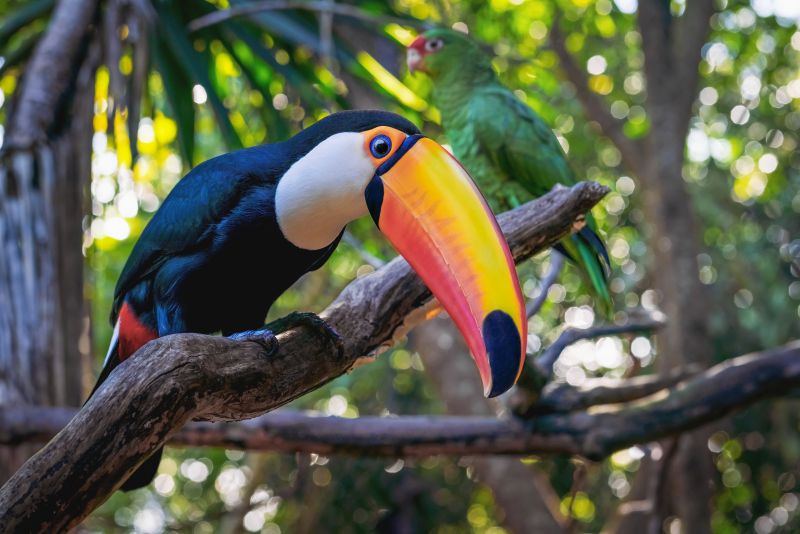
Toucans are synonymous with the rainforest, found in a variety of habitats across Central and South America. These birds prefer the canopy and are often seen hopping between tree branches in search of food.
Physical Characteristics
The toucan’s most striking feature is its large, colorful bill, which, despite its size, is surprisingly light due to a hollow structure. Their vivid feathers range from stark black to bright yellows and reds, making them a joy to observe.
Conservation Status
Deforestation and the pet trade pose significant risks to toucan populations. Protective legislation and increased public awareness are vital for their survival, ensuring these iconic birds remain a symbol of rainforest biodiversity.
6. Blue-headed Parrot
Habitat and Range
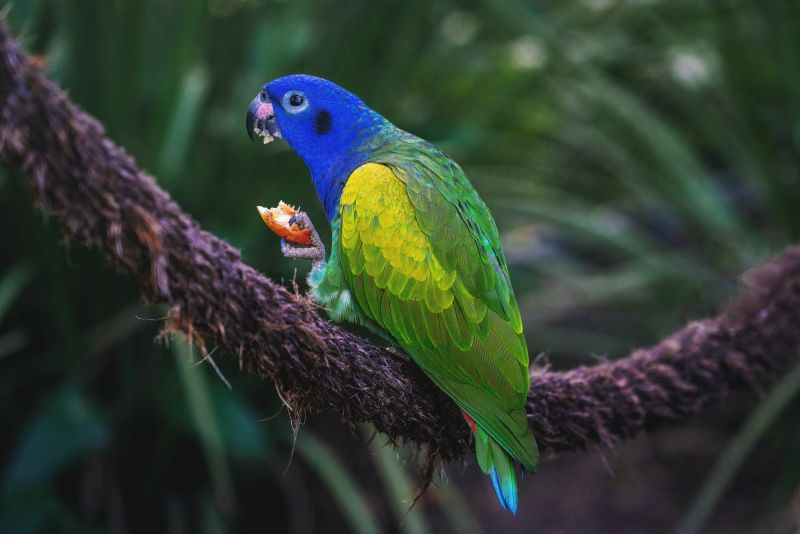
The Blue-headed Parrot is found throughout the Amazon Basin, thriving in both dense forests and more open areas altered by human activity. They are adaptable birds, often seen in small flocks or in mixed groups with other parrot species.
Physical Characteristics
As the name suggests, this parrot sports a stunning blue head contrasted against a green body. They are medium-sized parrots that are agile flyers and skilled climbers, using their feet and beaks to navigate the treetops.
Conservation Status
While currently listed as least concern, the Blue-headed Parrot faces threats from habitat loss and the illegal pet trade. Conservation measures focus on habitat protection and regulating trade to ensure these parrots continue to flourish in their natural environments.
7. Horned Screamer
Habitat and Range
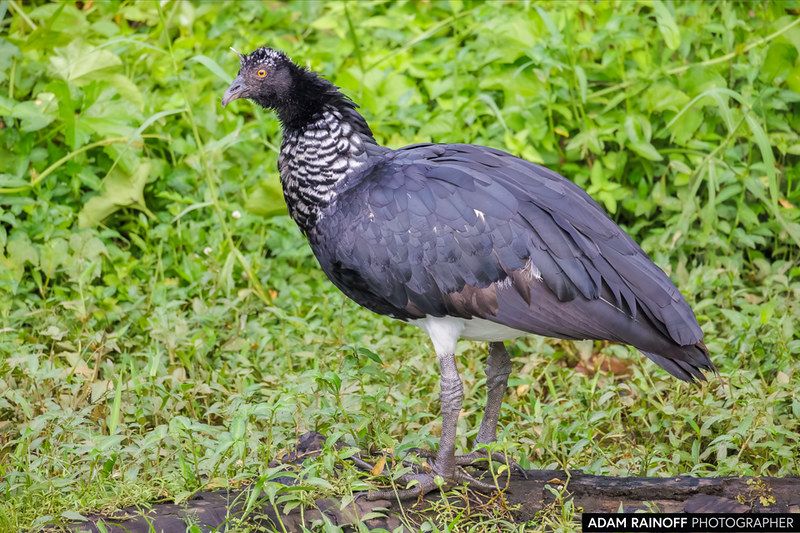
The Horned Screamer makes its home in the swampy regions and along the riverbanks of the Amazon rainforest. This unique bird prefers areas with dense vegetation and water, providing it with ample shelter and food resources.
Physical Characteristics
True to its name, the Horned Screamer is notable for the horn-like projection on its head, which is made of keratin. Its body is covered in black and white feathers, and it emits a loud, haunting call that can be heard over long distances.
Conservation Status
Though not currently endangered, the Horned Screamer’s well-being is closely linked to the health of its wetland habitats, which are under threat from drainage, pollution, and agricultural encroachment. Conservationists are focused on protecting these crucial wetlands to maintain the population of this unusual bird.
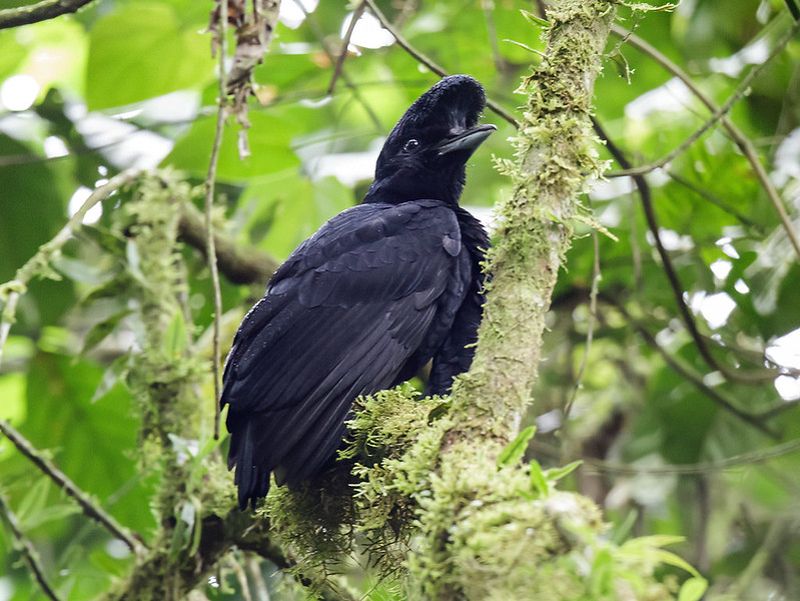
8. Umbrellabird
Habitat and Range
The Umbrellabird inhabits the lowland rainforests of Central and South America. It is particularly fond of dense, humid areas near rivers, where it can find shelter and food in abundance.
Physical Characteristics
The Umbrellabird is most famous for its large, umbrella-like crest on top of its head, which it can raise or lower. It also has a long, wattle-like feather that hangs from its neck, adding to its distinctive appearance. Its dark plumage helps it blend into the shadowy undergrowth of the forest.
Conservation Status
The Umbrellabird faces significant threats from deforestation and habitat fragmentation. Conservation efforts are crucial to preserve the remaining forest tracts that support this distinctive species, ensuring their survival amid changing environmental conditions.
9. King Vulture
Habitat and Range
The King Vulture soars above the tropical forests from Mexico through South America, preferring dense and undisturbed forest regions. It is often seen gliding high in the sky, searching for carrion with its keen eyesight.
Physical Characteristics
This vulture is striking, with a colorful face that includes shades of red, orange, and blue and white plumage with black tips on the wings. Its powerful beak is well suited for tearing meat, making it a vital part of the ecosystem’s clean-up crew.
Conservation Status
Though currently stable, the King Vulture’s reliance on large tracts of undisturbed forest makes it vulnerable to deforestation. Protecting these areas is essential for maintaining the health of the ecosystem and ensuring the King Vulture can continue to thrive in its natural habitat.

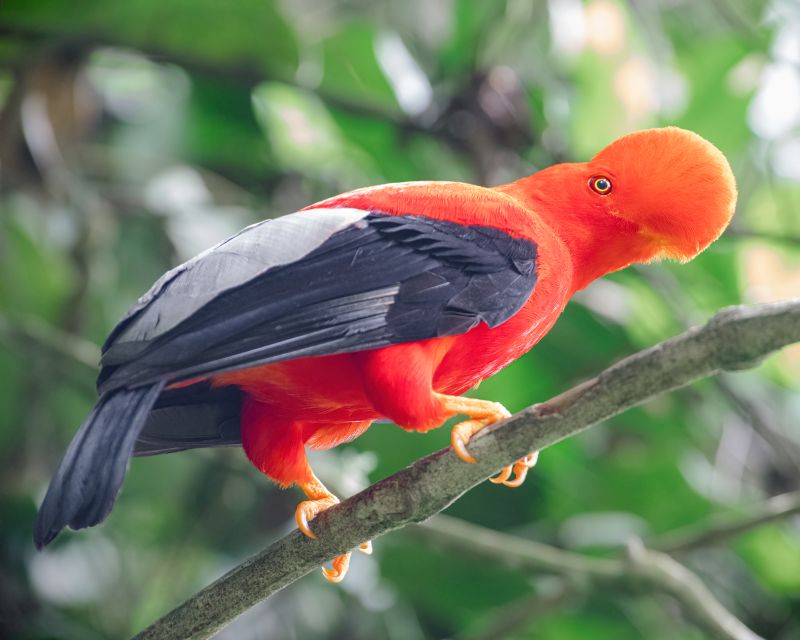
10. Cock-of-the-rock
Habitat and Range
The Cock-of-the-rock is one of the most flamboyantly colored birds found in the Andean cloud forests of South America. These birds thrive in humid, shadowy forest areas where their bright colors blend surprisingly well with the vibrant undergrowth.
Physical Characteristics
Males are particularly notable for their brilliant orange or red plumage and a distinctive disk-like crest that covers their forehead and eyes. They are medium-sized birds with strong legs, adapted to their life among rocky outcrops.
Conservation Status
While not currently endangered, the Cock-of-the-rock is threatened by habitat destruction caused by deforestation and land development. Efforts to preserve their cloud forest habitats are crucial for their continued survival and the ecological balance of these regions.
Conclusion
Exploring the world of rainforest birds opens a window to the incredible diversity and beauty of these ecosystems. Each bird, from the vibrant Scarlet Macaw to the elusive Cock-of-the-rock, plays an integral role in the ecological dynamics of their habitats.
As birdwatchers and conservationists, it’s our responsibility to not only admire but also protect these magnificent creatures and their homes.Through continued conservation efforts and increased awareness, we can preserve the experience of the splendor of these breathtaking rainforest birds for future generations.