
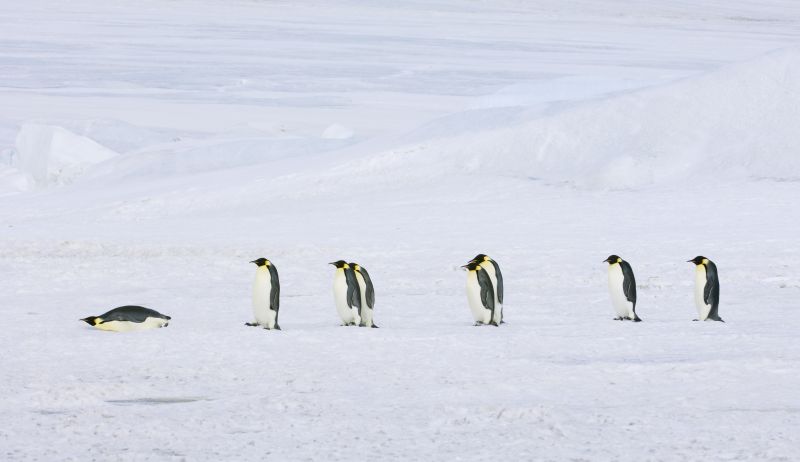
Welcome to the world of penguins—those delightful, tuxedoed birds that waddle their way into our hearts with their charm and surprising antics. Beyond their iconic appearance lies a treasure trove of fascinating and often quirky facts that make them truly unique creatures of the avian world.
Join us as we dive into the lesser-known aspects of penguin life, from their romantic pebble proposals to their high-speed underwater escapades. Get ready to be amazed and delighted by these fun facts about our feathered friends from the Southern Hemisphere!
Fun Facts About Penguins
1. Penguin Proposals
Did you know that male penguins often propose to their mates with pebbles? It’s a charming ritual where the male presents a pebble to the female as a token of his affection. If she accepts, they’re officially a pair!

2. Dancing Machines
Some penguin species are not just adept swimmers but also fantastic dancers! During courtship, they engage in elaborate dances and vocalizations to attract a mate. It’s like a feathered ballet on the ice!
3. Fashionistas of the Antarctic
Penguins molt every year, shedding their old feathers for new ones. During this time, they may look a bit scruffy, but soon they regain their sleek, tuxedo-like appearance—perfect for any formal occasion!
4. Speedy Swimmers
Penguins are not just cute waddlers on land; they are also incredible swimmers. They can reach up to 22 miles per hour underwater, making them faster than most Olympic swimmers!
5. Family Values
When it comes to parenting, Emperor penguins take dedication to a whole new level. Males endure the harsh Antarctic winter by balancing an egg on their feet for months without eating. Now that’s what we call commitment!

6. Underwater Serenades
Penguins don’t just communicate with calls and squawks—they sing underwater! Each penguin species has its own unique vocalizations, which they use to communicate with their colony members.
7. Social Gatherings
Penguins are social birds and often gather in large colonies called rookeries. These gatherings help them stay warm in cold climates and provide protection against predators.
8. Climate Adaptations
While most penguins are associated with cold climates, some species, like the Galápagos penguin, thrive in warmer waters. They’ve adapted to survive in tropical climates, showcasing their versatility.
9. Penguin Preening Parties
Keeping those tuxedo feathers in perfect condition is serious business for penguins. They spend a lot of time grooming and preening to maintain waterproofing and insulation, even using a special oil gland near their tails.

10. No Polar Bear Encounters
Despite both living in icy regions, penguins and polar bears never meet in the wild. Penguins exclusively inhabit the Southern Hemisphere, while polar bears roam the Arctic.
11. Homecoming Tradition
Penguins often return to the same nesting site year after year, sometimes traveling thousands of miles to get there. It’s a testament to their strong homing instincts and loyalty.
12. Marking Territory
Penguins have a unique way of marking their territory—they pee! Their urine contains high uric acid levels, leaving behind visible white stains on the ice.
13. Penguin Vision
Penguins have excellent vision both above and below water, which helps them spot prey and predators. Some species can even see in low-light conditions, aiding their hunting abilities.
14. Penguin Super Senses
Penguins have keen senses, particularly their vision, which helps them navigate both above and below water. This sharp eyesight is crucial for spotting predators and prey in their icy habitats.

15. Feathered Doppelgängers
Penguins have a few avian look-alikes, such as the Puffin and the Guillemot. These birds share similar coloring and behaviors, but they belong to different bird families and have distinct ecological niches.
16. Porpoising Penguins
When entering the water, penguins use a technique called “porpoising.” They leap in and out of the water, which helps them move quickly and efficiently, avoiding potential predators like seals and orcas.
17. Social Huddles
To stay warm in the frigid Antarctic waters, penguins huddle together in large groups. These huddles not only conserve heat but also strengthen social bonds within the colony.
18. Penguin Diet
Penguins are opportunistic feeders, consuming a variety of seafood such as fish, squid, and krill. Their diet varies by species and location, adapting to available food sources in their habitats.
19. Annual Molting
Penguins molt annually, shedding their old feathers for new ones. During this molting period, they may look less sleek and fluffy, but soon their feathers grow back, maintaining their iconic appearance.

20. Penguin Adaptations
Penguins have evolved several adaptations for survival in their environments, including specialized feathers for insulation and streamlined bodies for efficient swimming. These adaptations enable them to thrive in harsh conditions.
Conclusion
And there you have it—twenty fun and quirky facts about the fascinating world of penguins! From their charming pebble proposals to their incredible underwater acrobatics, penguins continue to captivate us with their unique behaviors and adaptations.
Next time you see a penguin waddling or diving gracefully in a documentary or at the zoo, remember these delightful tidbits that make them such remarkable birds. Whether they’re singing underwater, huddling for warmth, or showing off their sleek tuxedo-like feathers, penguins always bring a smile to our faces.
We hope these facts have sparked your curiosity and deepened your appreciation for these incredible creatures of the Southern Hemisphere. Share your knowledge of these fun facts with your family and friends to spread the joy of penguin trivia and celebrate the charm of these beloved birds!
Keep exploring, learning, and marveling at nature’s wonders—especially the delightful world of penguins!