

Europe certainly is a treasure trove of natural beauty, and among its most spectacular sights are the birds of prey that soar through its skies. These magnificent creatures play a pivotal role in the ecosystem, maintaining balance and offering us moments of awe as they glide and hunt. Whether you’re an experienced birder or just beginning to explore this fascinating hobby, observing Europe’s birds of prey can be an enriching experience. From the majestic Golden Eagle to the swift Peregrine Falcon, each species offers a unique glimpse into the wonders of avian life. Let’s embark on a journey to discover and appreciate these remarkable birds.
Basics of Bird Identification
Identifying birds of prey can be both thrilling and challenging. It requires patience, keen observation, and a bit of knowledge. Start with the basics: size, shape, and silhouette. These are the first clues to distinguishing one species from another. Pay attention to the bird’s size relative to familiar birds, like crows or sparrows. The shape of a bird, including its wings, tail, and beak, can tell you a lot about its lifestyle and hunting strategy. For instance, broad wings suggest a bird that soars high, like the Buzzard, while shorter wings indicate a forest dweller adept at maneuvering through trees, like the Goshawk.
Next, observe the bird’s flight pattern. Some species, such as the Osprey, have a distinctive way of flying that can make identification from a distance easier. Coloration and markings are also key. Look for unique features such as the Red Kite’s reddish-brown body and forked tail, or the Barn Owl’s heart-shaped face.
Lastly, consider the habitat. Birds of prey are often adapted to specific environments, so noting where you spot a bird can significantly narrow down the possibilities. Forests, open fields, mountains, and coastlines each host different species. With practice, these basics of bird identification will become second nature, enhancing your birdwatching adventures across Europe.
1. Golden Eagle (Aquila chrysaetos)
Habitat
The Golden Eagle, a symbol of majesty and power, finds its home across the diverse landscapes of Europe. This bird prefers open and semi-open areas, from the remote Scottish Highlands to the expansive mountain ranges of the Alps and the Pyrenees. It thrives in regions where it can soar high and scout for prey, making nests on cliff edges or in tall trees in less mountainous areas. The Golden Eagle’s adaptability to various habitats, including forests and arid environments, showcases its impressive survival skills.
Identification
Identifying a Golden Eagle is a moment of excitement. These birds are among Europe’s largest birds of prey, with wingspans reaching up to 2.3 meters. They have dark brown plumage with lighter golden-brown feathers on their heads and necks, giving them their name. Juveniles display white patches on their wings and tail, which fade as they mature. Their broad wings and long, rounded tails are unmistakable in flight, a sight that captivates birdwatchers.
Diet
Golden Eagles are versatile hunters, feeding on a wide range of prey. Their diet primarily consists of medium-sized mammals, such as rabbits, hares, and marmots. However, these eagles are also known to take down larger prey, including young deer, especially in winter when smaller prey is scarce. Birds, reptiles, and carrion supplement their diet. Golden Eagles use their keen eyesight to detect prey from great distances, then swoop down at high speeds to capture it with their powerful talons.

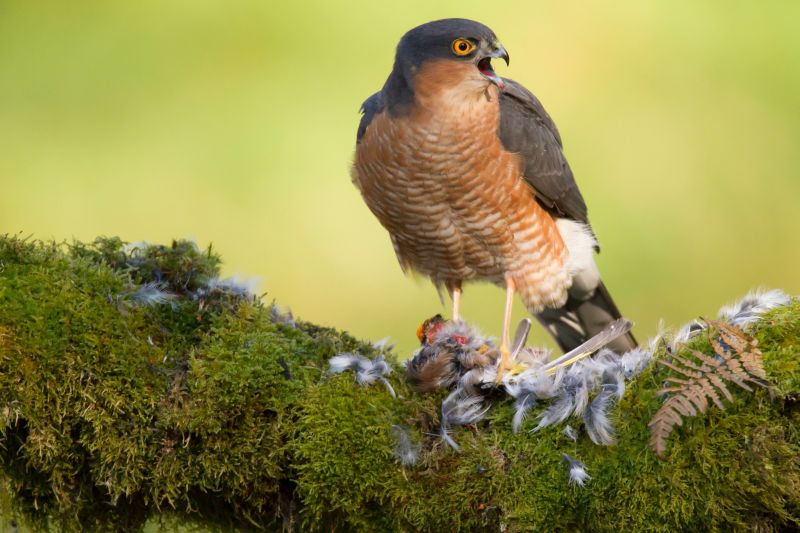
2. Eurasian Sparrowhawk (Accipiter nisus)
Habitat
The Eurasian Sparrowhawk is a frequent visitor to European gardens and woodlands, making it a familiar sight for many birdwatchers. These birds are adaptable and can be found in diverse habitats, ranging from dense forests to urban areas. They prefer areas with plenty of cover to ambush their prey, making mixed woodlands and suburban gardens with mature trees ideal. Despite their wide range, sparrowhawks maintain a strong territorial presence, defending their chosen area fiercely.
Identification
Sparrowhawks are smaller than many other birds of prey, with males significantly smaller than females. Males have a distinctive blue-grey back and wings, with orange-barred underparts, while females are larger with browner plumage. Both sexes display a characteristic long tail and short, rounded wings, designed for agility in tight spaces. Their rapid, fluttering flight is often interspersed with glides, making them adept at navigating through trees and hedges.
Diet
Eurasian Sparrowhawks specialize in hunting small birds, such as finches, sparrows, and tits. Their hunting strategy involves surprise attacks, using vegetation and terrain to conceal their approach before making a swift and decisive strike. Sparrowhawks are also known to visit bird feeders in gardens, taking advantage of the gathering of potential prey. Their presence in an area is a natural control of small bird populations, contributing to the ecological balance.
3. Peregrine Falcon (Falco peregrinus)
Habitat
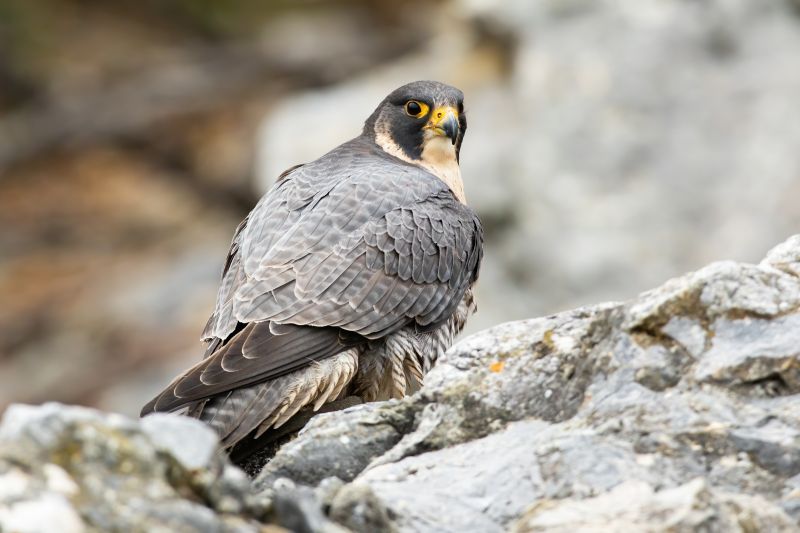
The Peregrine Falcon, known for its breathtaking speed, inhabits various environments across Europe. From tall city buildings to cliff faces in remote countryside, these birds adapt seamlessly. They prefer high vantage points where they can launch into a stoop to catch their prey, making urban skyscrapers as suitable as natural cliffs. The Peregrine Falcon’s ability to thrive in diverse habitats demonstrates its incredible adaptability, making it a common sight in both urban and rural European settings.
Identification
Spotting a Peregrine Falcon is often a heart-stopping experience for birdwatchers. Known as the fastest bird in the world, its sleek, streamlined body allows it to reach speeds over 320 km/h during its hunting stoop. Adults have a distinctive blue-grey back, a white underbelly with black barring, and a black head with a characteristic “moustache” contrasting sharply with its white throat. The bird’s robust build, with long, pointed wings and a short tail, is designed for speed and precision.
Diet
Peregrine Falcons feed almost solely on other birds, showcasing their remarkable aerial hunting skills. They are capable of catching a wide variety of species, from small songbirds to medium-sized birds such as pigeons and ducks. The falcon’s hunting technique involves a high-speed dive, striking their prey in mid-air with a powerful blow. This method of hunting is as efficient as it is spectacular, ensuring the Peregrine Falcon remains at the top of the bird of prey hierarchy in Europe.
4. Common Buzzard (Buteo buteo)
Habitat
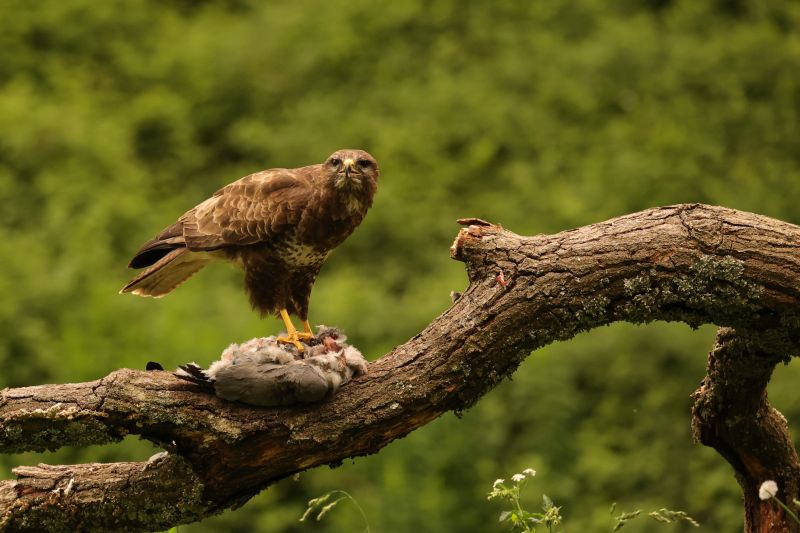
The Common Buzzard is one of Europe’s most widespread birds of prey, favoring a variety of habitats that include open woodlands, farmland, and heathlands. These adaptable raptors are particularly fond of areas with a mix of forest and open country, which provide ample hunting opportunities and suitable nesting sites. The presence of trees for perching and scanning for prey, combined with open spaces for soaring, makes these environments ideal for the Common Buzzard.
Identification
The Common Buzzard is easily recognizable by its broad, rounded wings and short tail, which make it well-suited for soaring and gliding over open landscapes. Its plumage varies widely, from very light to very dark, but typically features a pattern of brown, white, and sometimes a rufous hue. In flight, the Buzzard often holds its wings in a shallow ‘V’ shape. Its mewing call, reminiscent of a cat, is a familiar sound in its habitat, helping birdwatchers identify it even without visual confirmation.
Diet
Common Buzzards have a varied diet consisting primarily of small mammals, such as voles, mice, and rabbits. Depending on availability, they are opportunistic feeders, also preying on birds, reptiles, insects, and earthworms. Buzzards often hunt by soaring high above the ground or by perching inconspicuously before swooping down on their prey. Their adaptable feeding habits have allowed them to thrive across a range of European landscapes, making them a common sight for wildlife enthusiasts.
5. Red Kite (Milvus milvus)
Habitat
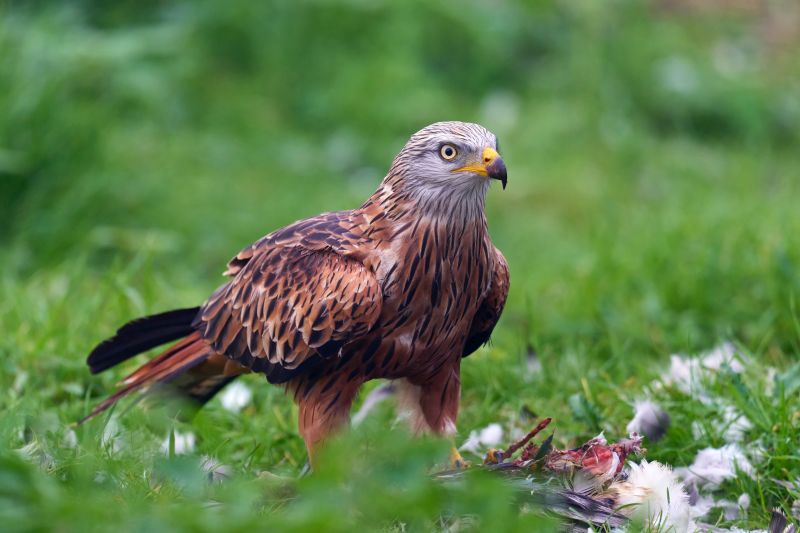
The Red Kite, with its distinct reddish-brown plumage and forked tail, graces the skies of Europe, mainly thriving in open countryside, woodlands, and along the edges of forests. This bird of prey prefers landscapes where mixed agricultural and woodland habitats provide ample feeding opportunities and nesting sites. Conservation efforts in parts of Europe, especially in the UK, have helped to revive its population, making the Red Kite a conservation success story. These birds are often seen gliding gracefully over valleys and fields, a testament to their adaptability and the success of wildlife protection measures.
Identification
Identifying a Red Kite is a joy, thanks to its unique silhouette and coloration. The most striking feature is its deeply forked tail, which it uses skillfully as a rudder while gliding. The kite’s wings are long and broad, with a distinctive pattern of black, white, and a rich, reddish-brown that covers most of its body. In flight, the contrast between its light underwing and darker plumage makes the Red Kite unmistakable against the backdrop of the European sky.
Diet
Red Kites are known for their opportunistic feeding habits, primarily scavenging on dead animals. They also hunt small mammals and birds, and can often be seen picking up food scraps in areas of human habitation. This adaptability in diet has been crucial for the survival and growth of their populations, particularly in areas where human activity has altered natural habitats. Their presence in the sky, often in groups, can lead birdwatchers to spots where food is available, highlighting the kite’s role in the ecosystem as both predator and scavenger.
6. Osprey (Pandion haliaetus)
Habitat
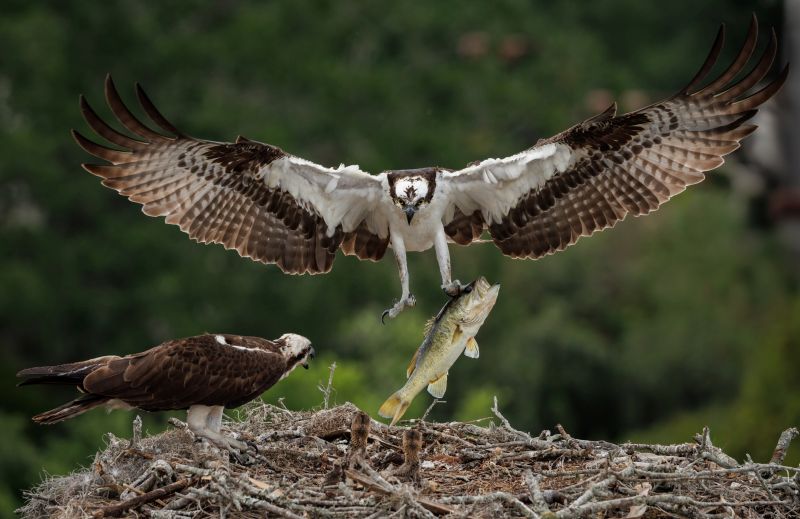
The Osprey, a fish-eating bird of prey, is found near lakes, rivers, and coastlines throughout Europe. This raptor prefers habitats that provide abundant fishing opportunities, making it a familiar sight hovering over water bodies before diving feet-first to catch fish. Ospreys have adapted to various aquatic environments, from the northern lakes to the Mediterranean coasts, showcasing their versatility. They often nest on tall structures such as trees, cliffs, and even man-made platforms specifically designed to encourage breeding.
Identification
The Osprey can be identified by its distinctive white underparts and dark brown upperparts, creating a sharp contrast. Its head is white with a dark mask across the eyes, extending to the sides of the neck. The Osprey’s wings are long, narrow, and bent at the wrist, making its silhouette unique among birds of prey. In flight, these features, along with its behavior of hovering over water, make the Osprey easily distinguishable. The sight of an Osprey plunging into the water to catch fish is a spectacular display of nature’s precision.
Diet
The diet of the Osprey is almost exclusively fish, making it one of the few raptors worldwide with such a specialized diet. Its talons are uniquely adapted to grasp slippery fish, and a reversible outer toe helps it to hold its catch securely during flight. Ospreys are skilled hunters, capable of diving into water from considerable heights to snatch fish near the surface. This diet reflects the osprey’s close relationship with aquatic habitats and underscores the importance of healthy water ecosystems for the survival of this species.
7. Northern Goshawk (Accipiter gentilis)
Habitat
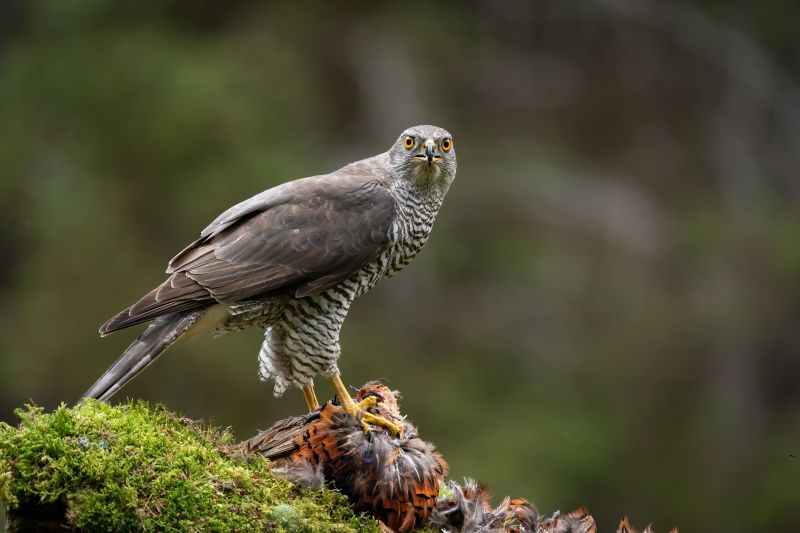
The Northern Goshawk, a formidable predator, prefers the dense cover of large coniferous and deciduous forests. These birds require vast stretches of woodland to thrive, as such environments provide ample hunting grounds and nesting opportunities. Goshawks are secretive birds, often more heard than seen, making their presence known through sharp calls. Their preference for dense forest habitats makes them challenging to spot, adding an element of excitement for birdwatchers venturing into these environments.
Identification
Identifying a Northern Goshawk requires a keen eye, as they blend well with their forested surroundings. Adult goshawks have a striking appearance, with slate-gray upperparts and finely barred underparts. Their red eyes, set in a fierce expression, and a distinctive white eyebrow stripe, give them a commanding presence. Juveniles display a brownish coloration, making them less conspicuous. The goshawk’s powerful, broad wings and long tail enable agile flight through dense forests, distinguishing them from other raptors.
Diet
Northern Goshawks have a diverse diet, primarily consisting of birds and mammals. They are known for their hunting prowess, capable of catching prey ranging from squirrels and rabbits to crows and other medium-sized birds. Goshawks hunt with sudden bursts of speed, navigating through trees to surprise their prey. The versatility in their diet reflects their adaptability and skill as predators, cementing their status as apex hunters within their forest habitats.
8. European Honey Buzzard (Pernis apivorus)
Habitat
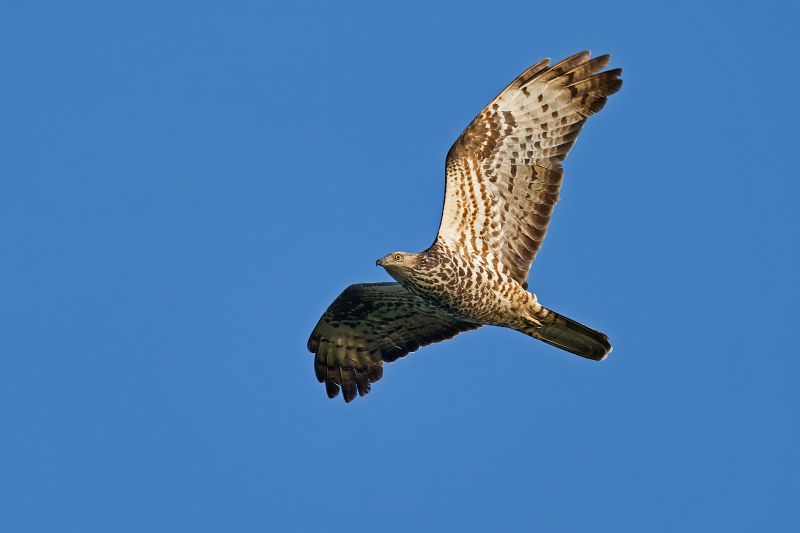
The European Honey Buzzard is a unique bird of prey, favoring woodlands and forests close to open areas where it can forage. This species is fascinating due to its migration patterns, spending the winter in Africa and returning to Europe for the breeding season. The honey buzzard’s habitat choice is closely linked to the presence of wasp and bee nests, which are crucial for its diet. These birds are often found in mixed forested landscapes that provide both nesting sites and abundant foraging opportunities.
Identification
Distinguishing a European Honey Buzzard from other raptors can be intriguing due to its varied plumage. These birds exhibit a broad range of colors, from dark browns to lighter shades, often with a distinctive pale head and a conspicuous P-shaped pattern under their wings when in flight. The honey buzzard’s long head and neck give it a somewhat vulture-like appearance when seen from a distance. Its wings are long and broad, suited for soaring as it searches for food, with a relatively long tail that aids in maneuverability.
Diet
Unlike most birds of prey, the European Honey Buzzard has a specialized diet, feeding primarily on the larvae and adults of wasps and bees. This unusual preference requires unique adaptations; the honey buzzard possesses scale-like feathers on its head and face to protect against stings, and strong claws to dig into nests. While it occasionally eats small mammals and birds, its diet predominantly comprises these insects. The honey buzzard’s feeding habits are a fascinating example of ecological niche specialization among European raptors.
9. Barn Owl (Tyto alba)
Habitat
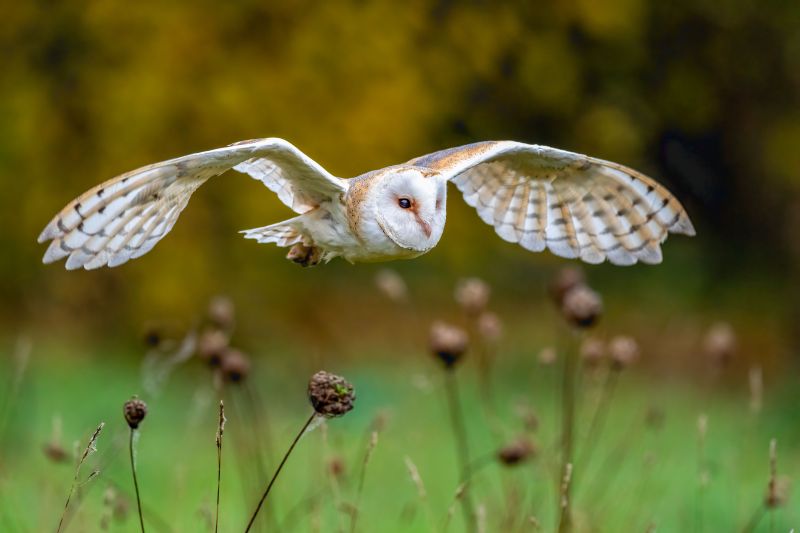
With its ghostly appearance and silent flight, the Barn Owl is a widespread resident across Europe, favoring open countryside, farmland, and areas with a mix of woodland and field. These birds are often found near human habitation, utilizing barns, church steeples, and old buildings for nesting, hence their name. The availability of open areas for hunting and structures for nesting are crucial for the barn owl’s survival, making agricultural landscapes ideal habitats.
Identification
The Barn Owl’s distinctive heart-shaped face and pure white or light brown underparts, contrasted with golden-brown upperparts and long, rounded wings, make it easily recognizable. Its large, dark eyes are adapted for night vision, essential for its nocturnal lifestyle. The barn owl’s silent flight is attributed to the unique structure of its feathers, allowing it to glide silently over fields as it hunts for prey. This silent approach, combined with its eerie screech, contributes to the barn owl’s mythical status in folklore.
Diet
Barn Owls are specialized hunters, feeding primarily on small mammals like shrews, voles and mice. Their diet may also include small birds, insects, and other small creatures, depending on availability. When hunting, Barn Owls fly close to the ground in fields, using their acute hearing and silent flight to locate and swoop down on prey in the darkness. Because of this efficient hunting method, barn owls play a considerable role in controlling rodent populations in their habitats.
10. White-tailed Eagle (Haliaeetus albicilla)
Habitat
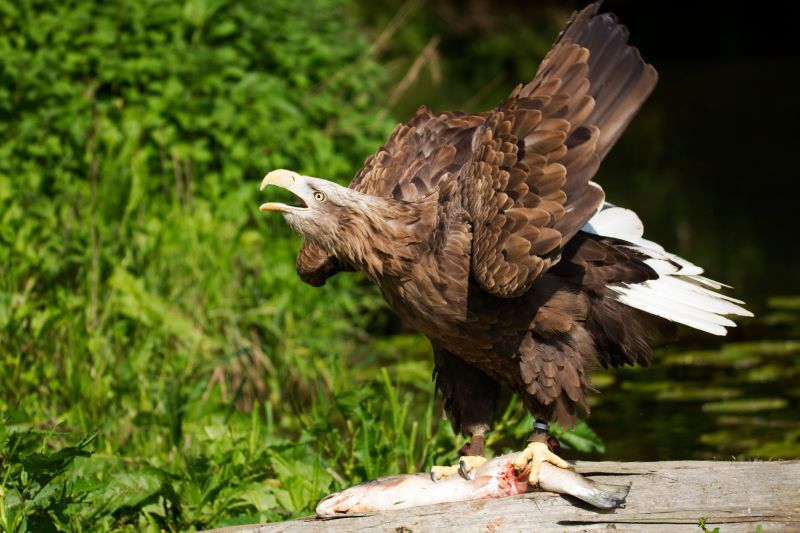
The White-tailed Eagle, Europe’s largest eagle, is found near large bodies of water, including lakes, rivers, and coastal areas. This majestic bird prefers habitats that offer abundant fish, its primary food source, as well as large trees or cliffs for nesting. White-tailed Eagles have made a remarkable comeback from the brink of extinction in some European countries, thanks to conservation efforts. Their presence symbolizes the success of wildlife protection and habitat restoration, making them a flagship species for conservation.
Identification
The White-tailed Eagle is notable for its massive size, with a wingspan reaching up to 2.5 meters, making it one of the most impressive birds of prey in Europe. Adults are easily identifiable by their brown body, pale head and neck, and, most distinctively, their broad, white tail. In flight, their massive wings are held flat, giving them a striking appearance. Juvenile eagles lack the white tail, displaying a darker overall plumage until they mature.
Diet
Primarily fish-eaters, White-tailed Eagles are adept at plucking fish from the water with their strong talons. Their diet is supplemented by water birds, small mammals, and carrion. These eagles are known to scavenge, taking advantage of dead fish and animals, which makes them essential participants in their ecosystem’s nutrient cycle. The White-tailed Eagle’s fishing technique, often involving a spectacular swoop and grab, is a sight to behold, showcasing the remarkable adaptability and skill of these avian predators.
Conservation Status
The conservation status of Europe’s birds of prey presents a mixed picture, with some species thriving and others still facing significant challenges. Successful conservation efforts, such as habitat protection, legal protection from hunting, and reintroduction projects, have led to notable recoveries, as seen with the White-tailed Eagle and the Red Kite. However, habitat loss, pollution, and human-wildlife conflict continue to threaten many species. The use of pesticides and rodenticides, for instance, poses a significant risk to birds of prey by reducing their food sources or causing direct poisoning.
Climate change also emerges as a growing threat, altering habitats and affecting the distribution and availability of prey. Conservation initiatives must therefore be dynamic and adaptable, addressing not only immediate threats but also the broader environmental changes impacting these birds. Engaging local communities, promoting sustainable land use practices, and strengthening legal protections are crucial steps in ensuring the future of Europe’s raptors. Birdwatchers and nature enthusiasts play a vital role in these efforts, contributing to citizen science projects and increasing awareness about the importance of birds of prey in European ecosystems.
Conclusion
Europe’s birds of prey are not just symbols of wild beauty and power; they are integral to the balance and health of ecosystems across the continent. Observing these exquisite birds in their natural habitats offers a window into the complexity and resilience of nature. The journey of learning to identify, understand, and appreciate these birds is endlessly rewarding, offering profound and humbling moments of connection with the natural world.
As birdwatchers, we share a responsibility to protect these creatures and their habitats so future generations can also experience the thrill of seeing a Golden Eagle soar or hearing the mysterious call of a Barn Owl at dusk. By supporting conservation efforts and fostering a deep regard for the natural world, we contribute to a legacy of stewardship and respect for the wild inhabitants of our planet. Let us continue to explore, learn, and advocate for the birds of prey that grace the skies of Europe, for in their flight, we find inspiration and hope for the preservation of our shared natural heritage.