

Welcome to the enchanting realm of South American birds of prey, where the skies are animated with the grace and power of some of the planet’s most formidable avians. With its unparalleled biodiversity, this continent hosts a remarkable variety of raptors, each with its unique story of survival, adaptation, and majesty. South America’s diverse ecosystems, from the Amazon Rainforest’s lush canopy to the Andean highlands’ stark beauty, provide the perfect habitats for these incredible birds.
For birdwatchers and nature lovers, these birds of prey offer more than just a glimpse into avian predation; they symbolize the wild heart of South America, untamed and free. The sight of a condor soaring over the Andes or a Harpy Eagle navigating the rainforest canopy can evoke a profound sense of wonder and respect for the natural world. These creatures are not only vital to their ecosystems as top predators but also serve as indicators of the health of their environments.
Embarking on a journey to discover these majestic raptors is to connect with the very essence of nature’s intricacy and beauty. Whether you are an experienced birdwatcher equipped with the latest gear or a novice enthusiast eager to learn, the birds of prey in South America promise to inspire and captivate. Let us delve into their world, exploring the lives and habitats of these magnificent birds, and perhaps, in the process, rediscover our connection to the natural world.
1. Harpy Eagle
Habitat
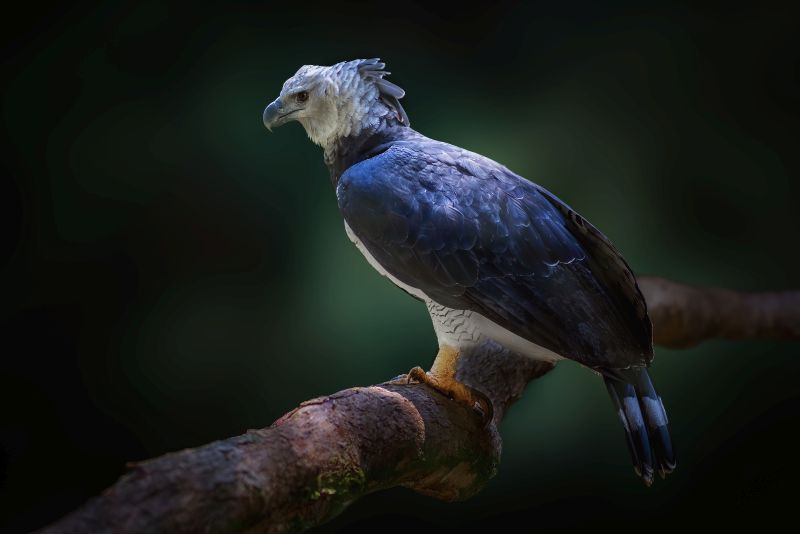
The Harpy Eagle, a majestic ruler of the South American rainforests, thrives in the dense, emerald canopies stretching across the continent. These lowland forests, teeming with life, provide the perfect hunting grounds for this formidable bird of prey. From Brazil’s vast Amazon to the lush jungles of Colombia and Venezuela, the Harpy Eagle’s domain is as vast as it is verdant. This bird selects the thickest parts of the forest for its home, where silence is broken only by the sounds of nature.
Characteristics
Beholding the Harpy Eagle is a remarkable experience. With its imposing stature, striking black and white plumage, and piercing eyes, it embodies the essence of a top predator. The females surpass males in size, tipping the scales at up to 9 kg (close to 20 pounds), making them one of the heaviest and most powerful raptors in the world. Their massive talons, comparable in size to a grizzly bear’s claws, are perfectly adapted for hunting medium-sized mammals, such as monkeys and sloths. Observing a Harpy Eagle in flight, with its broad, powerful wings effortlessly gliding through the air, is a mesmerizing experience that highlights the incredible adaptability and prowess of these birds.
Conservation Status
Despite their dominion over the rainforest canopy, Harpy Eagles face significant challenges. Deforestation and habitat destruction threaten their existence, reducing their hunting grounds and making it harder for them to find prey. These majestic birds need large territories to thrive, and as their natural habitat diminishes, so does their population. Conservation initiatives are critical to preserving the Harpy Eagle’s habitat and ensuring the survival of this magnificent species. Birdwatchers and conservationists alike play a vital role in these efforts, advocating for the protection of rainforests and supporting projects aimed at studying and conserving Harpy Eagles.
2. Andean Condor
Habitat
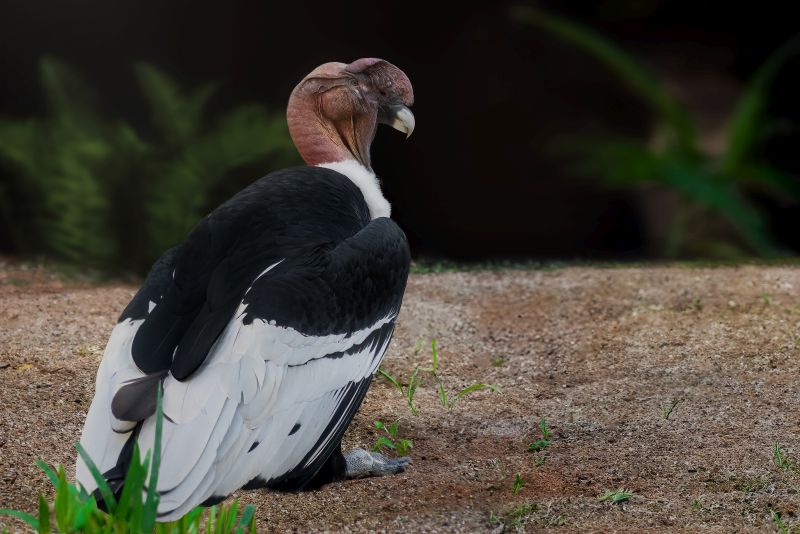
The Andean Condor embodies the spirit of the Andes as it soars above the high peaks and vast open landscapes of South America. This vulture prefers the rocky, mountainous regions stretching along the continent’s western edge, from Venezuela all the way down to the southern tip of Chile and Argentina. Their habitat encompasses the high Andean altitudes, windswept coastal areas, and open grasslands, where these birds can ride the thermal currents in search of food.
Characteristics
The Andean Condor is one of the biggest flying birds worldwide, with a wingspan that can exceed 3 meters (nearly 10 feet). This impressive span allows the condor to glide on air currents for hours with minimal effort. Males are distinguishable by their large white ruff around the neck and a distinctive red or black comb on the head. As scavengers, they play a vital role in their ecosystem, feeding on carrion and thus preventing the spread of disease. Witnessing an Andean Condor in flight is a testament to the elegance and mastery of nature’s design.
Conservation Status
The Andean Condor is facing a declining population due to a range of human-induced threats, including habitat loss, poisoning from lead ammunition, and direct persecution. These birds reproduce slowly, which makes their populations particularly vulnerable to decline. Conservation efforts are underway across their range, focusing on habitat protection, education to mitigate human-wildlife conflicts, and breeding programs to bolster wild populations. International cooperation is key to ensuring the survival of this iconic species, which holds significant cultural importance throughout South America.
3. Crested Caracara
Habitat
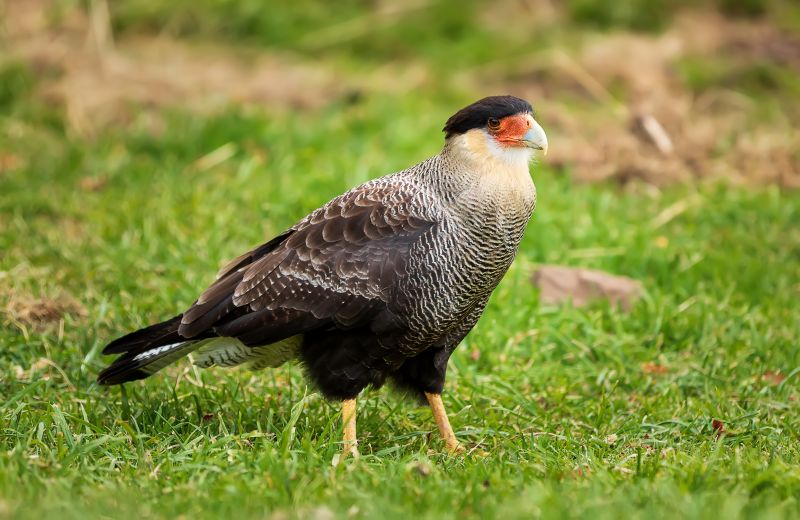
The Crested Caracara, a member of the falcon family, prefers open or semi-open landscapes across South America. This adaptable bird of prey can be found from the northern reaches of Colombia and Venezuela down to the southernmost tip of Tierra del Fuego. Caracaras are not picky about their habitats; they thrive in savannas, grasslands, coastal regions, and even human-altered landscapes such as pastures and farmland. This adaptability has allowed them to maintain stable populations in areas where other species might struggle.
Characteristics
The Crested Caracara is easily recognized by its striking appearance: black cap, reddish cheeks, and a white neck and throat, with a heavy bill perfect for scavenging. These birds are opportunistic feeders, eating carrion, insects, and small animals, and are even known to steal food from other raptors. On the ground, they walk with a confident, swaggering gait, surveying their surroundings for opportunities. In flight, they are powerful and deliberate, capable of impressive aerial displays during the breeding season.
Conservation Status
Fortunately, the Crested Caracara is not facing any immediate threats of widespread decline. Their adaptability to different environments, including those influenced by human activity, has allowed them to maintain stable population numbers. However, they still have challenges; habitat destruction and changes in how land is used can impact their food sources and nesting areas. Conservation efforts focus on monitoring populations and ensuring that their habitats are preserved, maintaining the ecological balance in which these fascinating birds play an integral part.
4. Peregrine Falcon
Habitat
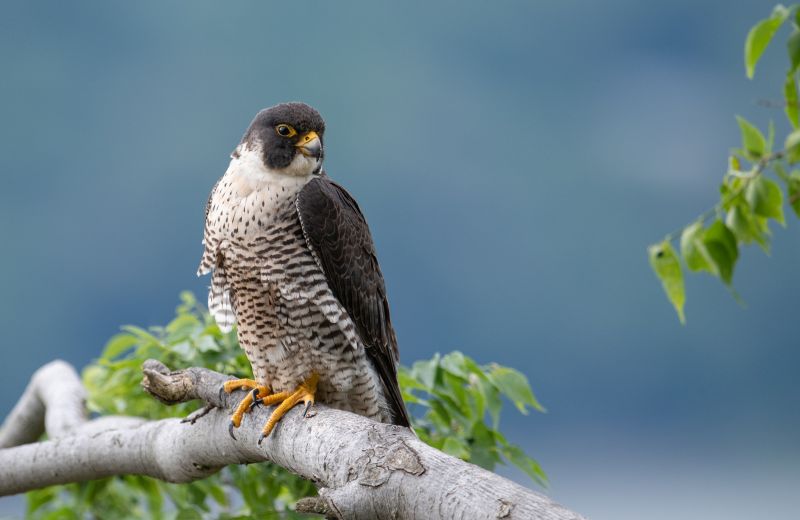
The Peregrine Falcon, a symbol of speed and agility, occupies a wide range of habitats across South America and the globe. This bird is as comfortable nesting on the ledges of tall city buildings as it is on the cliffs of remote mountain ranges. Its adaptability has allowed it to thrive from the coastal areas to the high Andes, demonstrating an incredible versatility in choosing nesting sites and hunting grounds.
Characteristics
Renowned as the fastest bird in the world, the Peregrine Falcon can reach speeds over 320 km/h (200 mph) during its hunting stoop (dive), making it a formidable predator. Sporting a blue-gray back, barred white underparts, and a distinctive black “mustache,” the peregrine falcon is not only a birdwatcher’s dream but also an icon of bird conservation success. Its diet is as diverse as its habitat, primarily consisting of medium-sized birds it captures in mid-air with astonishing precision.
Conservation Status
Once on the brink of extinction due to pesticide poisoning, the Peregrine Falcon has made a remarkable recovery worldwide, thanks partly to widespread DDT bans and dedicated breeding and reintroducing programs. While still facing threats from habitat destruction and climate change, the species’ wide distribution and increasing population are positive signs. Conservation efforts continue to monitor its health and ensure the peregrine falcon remains a success story.
5. American Kestrel
Habitat
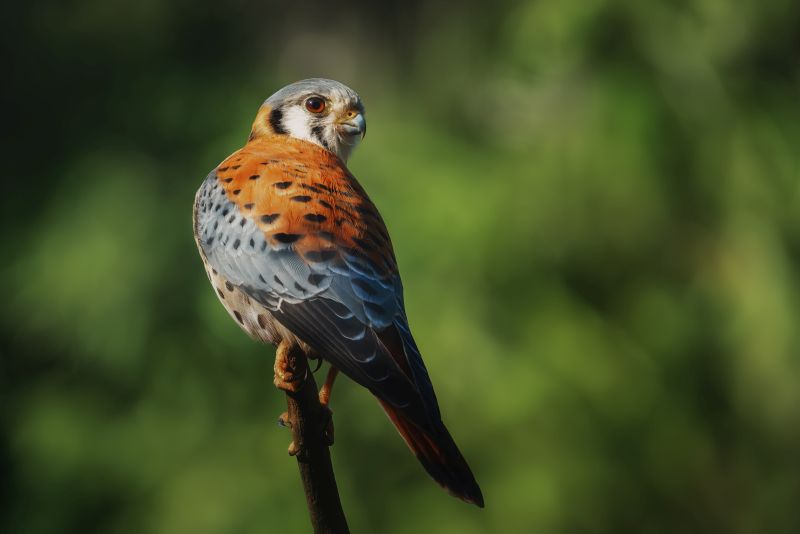
The American Kestrel, North America’s littlest falcon, extends its range into South America, adapting to a variety of habitats. These birds inhabit environments ranging from the chilly, elevated plains of the Andes to the humid, tropical regions of the Amazon Basin. American Kestrels favor open areas with sparse vegetation, such as grasslands, deserts, and parklands, where they can easily spot and swoop down on their prey.
Characteristics
The American Kestrel is known for its vivid coloration, with males sporting a striking combination of blue-gray wings and a rusty-red back and tail. Both males and females have a beautiful pattern of spots and lines across their bodies, making them one of the most colorful raptors in the world. Despite their small size, kestrels are fierce predators, feeding on insects, small mammals, and birds, showcasing remarkable hunting skills, including hovering in mid-air to spot prey before making a precise attack.
Conservation Status
The American Kestrel population has been experiencing a slow but noticeable decline in some parts of its range, attributed to habitat loss, pesticide use, and competition for nesting sites. Conservationists are actively researching these trends to develop strategies to halt the decline, including nest box programs to provide kestrels with safe places to breed. Public education and habitat preservation efforts are also vital to ensure the survival of this exquisite falcon species.
6. Black-chested Buzzard-Eagle
Habitat
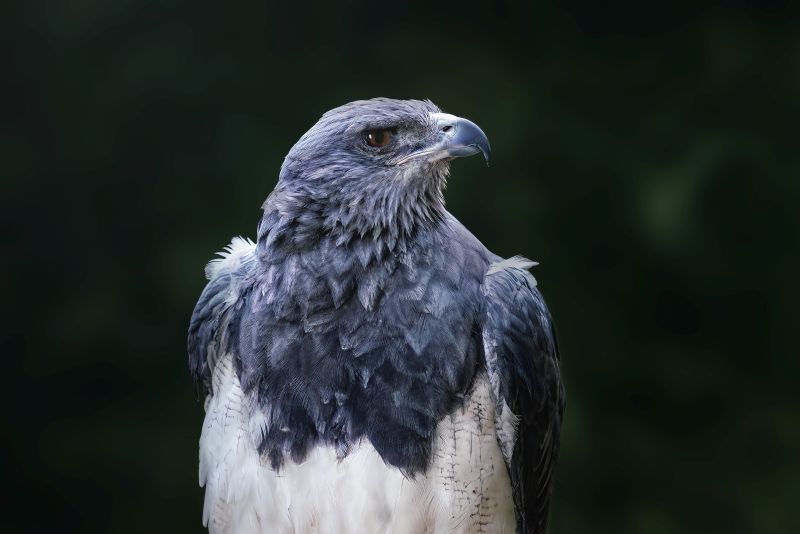
Primarily inhabiting open and semi-open terrains across South America, the formidable Black-chested Buzzard-Eagle is widespread. Its habitat spans from the southern areas of Argentina and Chile, across the Andean mountain ranges, to the continent’s dry plains. This bird prefers habitats that offer clear visibility for hunting and sparse vegetation for nesting, including grasslands, pampas, and lightly wooded areas.
Characteristics
With its impressive wingspan and distinctive silhouette, the Black-chested Buzzard-Eagle is an awe-inspiring sight. It has a dark gray back with a contrasting black chest and a white belly marked by a black stripe. Its broad wings and strong flight make it a master of the air, capable of soaring high while scanning the ground for prey. Diet-wise, it preys on a variety of animals, including rodents, smaller birds, and reptiles, demonstrating a versatile hunting strategy that includes both soaring flight and direct attacks from a perch.
Conservation Status
The Black-chested Buzzard-Eagle is presently categorized as being of most minor concern, maintaining a stable population throughout its distribution area. However, like many birds of prey, it faces threats from habitat degradation, poisoning, and collisions with vehicles and power lines. Conservation measures are less intensive than for other species, but monitoring its population trends is crucial to ensure it remains a common sight in South America’s skies.
7. Red-tailed Hawk
Habitat
The Red-tailed Hawk, one of the most widespread hawks in the Americas, extends its range into the northern parts of South America. This adaptable bird of prey finds its home in various habitats, from desert cliffs and mountainous regions to woodlands and tropical rainforests. It is also commonly seen in urban areas, where it has adapted to life near humans, utilizing tall buildings as nesting sites and open areas as hunting grounds.

Characteristics
The Red-tailed Hawk is easily identifiable by its rich brown coloration on the back and its pale underside, with a distinctive reddish-brown tail that gives this species its name. It is known for its soaring flight, broad wings, and powerful body, which make it an efficient hunter. Red-tailed Hawks feed on small mammals, birds, and reptiles, often seen perched along highways or soaring overhead in search of prey.
Conservation Status
Currently, the Red-tailed Hawk is considered to be of least concern, with a stable and even increasing population in some areas. This resilience is partly due to its adaptability, allowing it to thrive in varied environments, including those altered by human activity. Despite its widespread presence, ongoing monitoring and habitat conservation are essential to maintain healthy populations of this iconic raptor across its range.
8. Osprey
Habitat
The Osprey stands out as a distinctive bird of prey with a global distribution and significant presence in South America. This raptor favors coastal areas, rivers, and lakes rich in fish, its primary food source. Ospreys are often seen hovering over water bodies before diving feet-first to catch fish. Their nests are large structures built atop trees, cliffs, or man-made platforms near water. The adaptability of the Osprey allows it to inhabit diverse aquatic environments, from the tropical Amazon Basin to the temperate lakes of Patagonia.

Characteristics
Ospreys are identifiable by their white underparts, dark brown upperparts, and a distinctive black stripe through the eye. They possess specialized physical adaptations for fishing, including sharp spines on the underside of the toes, reversible outer toes, and dense plumage that is impervious to water. With a wingspan of up to 180 cm (6 feet), they are skilled fliers capable of precise aerial maneuvers. The sight of an Osprey plunging into the water to emerge with a fish in its talons is a testament to its mastery as a fisher.
Conservation Status
The Osprey is considered to be of least concern, thanks to stable and even growing populations in many parts of its range. Conservation efforts, including the construction of artificial nesting platforms and the protection of nesting and feeding sites, have helped to support Osprey numbers. However, they remain sensitive to environmental pollution, especially chemicals that accumulate in water bodies and the fish they eat. Ongoing environmental protection is crucial for maintaining healthy Osprey populations.
9. Aplomado Falcon
Habitat
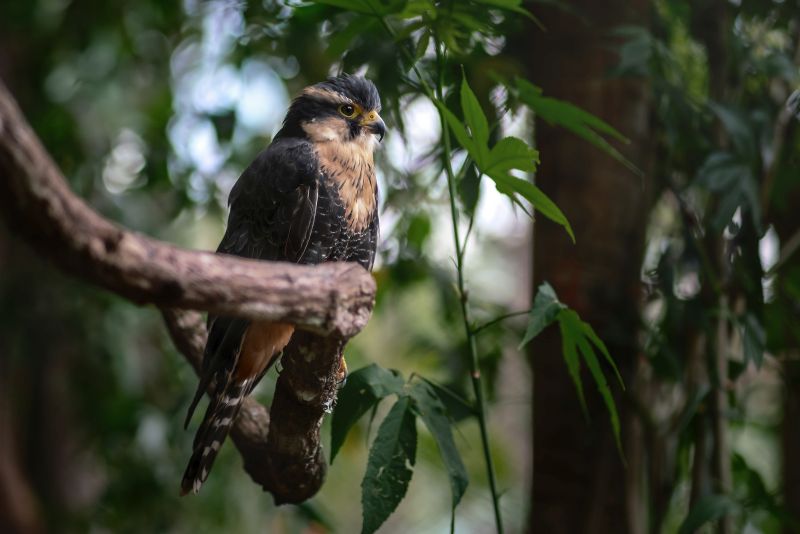
The Aplomado Falcon is a slender, medium-sized bird of prey that inhabits open country throughout much of South and Central America. This falcon prefers savannas, grasslands, and marshes, where it can pursue its prey across open skies. It is often found in pairs or small family groups, utilizing the vast open landscapes to spot and chase down insects, birds, and small mammals. The Aplomado Falcon’s presence signifies a healthy, open ecosystem free from extensive human development and deforestation.
Characteristics
Characterized by its long wings and tail, the Aplomado Falcon is built for speed and agility. Its plumage is striking, with a dark slate-gray back, contrasting white underparts with thin barring, and a distinctive facial pattern featuring a mustache and malar stripe. These falcons are known for their cooperative hunting tactics, often working in pairs to flush out birds before one makes the kill. Their speed and precision in flight make them formidable hunters, skilled at taking down larger prey by surprise.
Conservation Status
The Aplomado Falcon faces habitat loss and degradation threats, mainly due to agricultural expansion and urbanization. It is considered endangered in some parts of its range, although conservation programs, including habitat restoration and protection, are in place to help its recovery. Efforts to reintroduce the Aplomado Falcon to areas where it has disappeared have seen some success, highlighting the importance of ongoing conservation work to ensure the survival of this elegant raptor.
10. White-tailed Hawk
Habitat
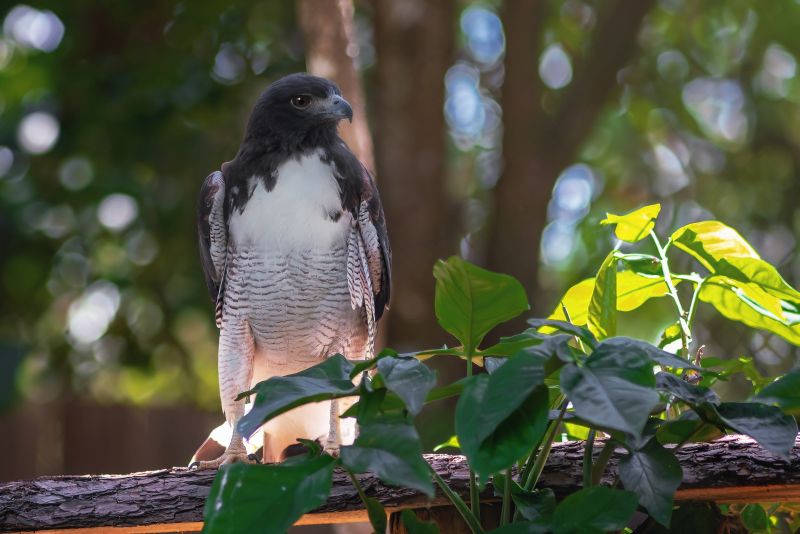
The White-tailed Hawk is a medium-sized raptor that inhabits open landscapes across South America, from the southern United States down through Argentina. It prefers open country, savannas, and coastal prairies, where it can spot its prey easily from a high perch or while soaring in the sky. This adaptable bird often shares its habitat with other raptors but tends to dominate the areas it occupies, thanks to its versatile hunting skills.
Characteristics
The White-tailed Hawk is notable for its striking plumage, with a contrasting pattern of dark upperparts and light underparts, and, as its name suggests, a distinctive white tail with a black band near the end. Its broad wings and tail enable it to maneuver deftly in flight as it hunts for rodents, birds, and reptiles. Observers often marvel at its agility, speed, and ability to hover in the wind while scanning the ground for prey.
Conservation Status
The White-tailed Hawk is currently listed as of least concern, with a stable population across much of its range. However, like many birds of prey, it faces threats from habitat destruction due to agricultural expansion and urbanization. Conservation efforts are focused on protecting its natural habitats and monitoring population trends to ensure that this hawk remains a common sight in the skies of South America.
Conclusion
The birds of prey in South America offer a fascinating glimpse into the continent’s rich biodiversity and the complex relationships within ecosystems. From the mighty Harpy Eagle to the agile Aplomado Falcon, each species plays a crucial role in maintaining the ecological balance. Their presence signifies the health of the environment and contributes to the natural heritage of the region.
As birdwatchers, conservationists, and nature enthusiasts, it is our responsibility to advocate for the protection and preservation of these iconic birds and their habitats. By supporting conservation efforts, engaging in responsible birdwatching practices, and increasing awareness about the significance of these predators, we can safeguard the inspiration that the majestic South American birds of prey provide to future generations. The journey through the skies of this vibrant continent reminds us of the beauty of the natural world and the need to protect it against the ever-growing challenges of human impact.