

Blackbirds are a fascinating group of birds found across the world. Known for their distinctive plumage and melodious songs, they capture the attention of bird enthusiasts. They inhabit a range of environments, from wetlands and grasslands to forests and urban areas. This adaptability makes it a joy for them to observe in different settings.
In this article, we’ll explore ten different kinds of blackbirds. Each one has unique characteristics and habitats. Whether you are a seasoned birdwatcher or a beginner, learning about these birds will enhance your appreciation of avian diversity. So, grab your binoculars and join us on this journey into the world of blackbirds!
1. Common Blackbird (Turdus merula)
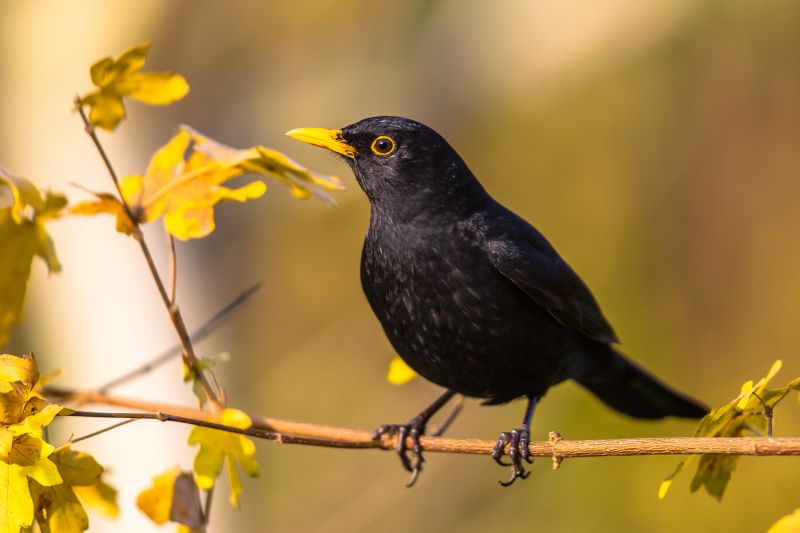
The Common Blackbird is one of the most recognizable birds in Europe. Males are glossy black with a bright orange-yellow beak and eye-ring. Females and juveniles are brown with speckled chests. These birds thrive in gardens, woodlands, and parks, making them a familiar sight in both urban and rural areas.
Common Blackbirds are known for their rich, melodious songs. Males sing from high perches to mark their territory and attract mates. Their song is a series of fluting notes that can be heard throughout the day, especially during early morning and late evening. Their diet consists of insects, worms, berries, and fruits. You can often see them hopping and digging through leaf litter or lawns in search of food. Watching their foraging behavior is quite entertaining, especially when they interact with each other or with other birds.
2. Red-winged Blackbird (Agelaius phoeniceus)
The Red-winged Blackbird is a striking bird found across North America. Males can be easily identified by their black plumage, and bright red and yellow shoulder blotches. Females are brown and heavily streaked, often mistaken for large sparrows. These birds favor wetlands, marshes, and wet meadows, but can also be found in agricultural fields and along roadside ditches.
Their song is a distinctive “conk-la-ree,” often heard as they perch on cattails or shrubs. Red-winged Blackbirds are highly territorial, especially during the breeding season. Males aggressively defend their nesting areas, frequently chasing away intruders. Their diet includes insects, seeds, and grains, which they find by foraging in the vegetation or on the ground. Watching their aerial displays and listening to their calls can be a highlight of any birdwatching trip. Their communal nesting habits and dynamic interactions make them a fascinating species to study.

3. Brewer’s Blackbird (Euphagus cyanocephalus)
Brewer’s Blackbird is commonly seen in western and central North America. Males have glossy black plumage with a slight purplish sheen and striking yellow eyes. Females are brownish-gray with darker wings and tails, making them less conspicuous but equally interesting. They are often found in open areas like fields, parks, and suburban landscapes, and are known for their adaptability to human environments.
These birds are known for their adaptability and can be seen foraging on the ground or in low vegetation. Their diet is varied, including insects, seeds, and grains. They are opportunistic feeders and are often seen picking at leftover food in parking lots or picnic areas. Brewer’s Blackbirds have a simple, repetitive song, often heard during the breeding season. Their social behavior and flocking habits make them interesting to observe year-round. In winter, they often form large flocks with other blackbird species, creating impressive displays in flight and at roosting sites. Watching these gatherings can provide insights into their social structure and communication methods.

4. Yellow-headed Blackbird (Xanthocephalus xanthocephalus)
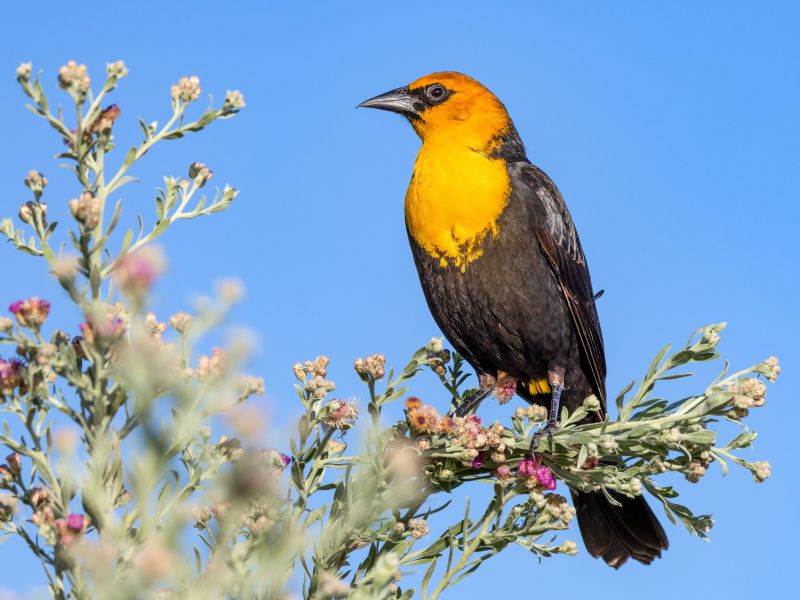
The Yellow-headed Blackbird is an eye-catching species found in North America, primarily in the western and central regions. Males are unmistakable with their vibrant yellow heads and chests contrasted against their black bodies and white wing patches. Females and juveniles are more subdued, with brownish bodies and duller yellow heads.
These birds prefer wetlands and marshes, often nesting in dense stands of cattails and reeds. Their loud, raspy calls are a distinctive feature of their breeding grounds. Yellow-headed Blackbirds are highly territorial during the breeding season, with males vigorously defending their nests. During breeding season, their diet consists mostly of insects, but they switch to seeds and grains in the fall and winter. Watching these birds forage and interact in their natural habitat can be a rewarding experience, especially when observing their unique vocalizations and displays.
5. Eastern Meadowlark (Sturnella magna)
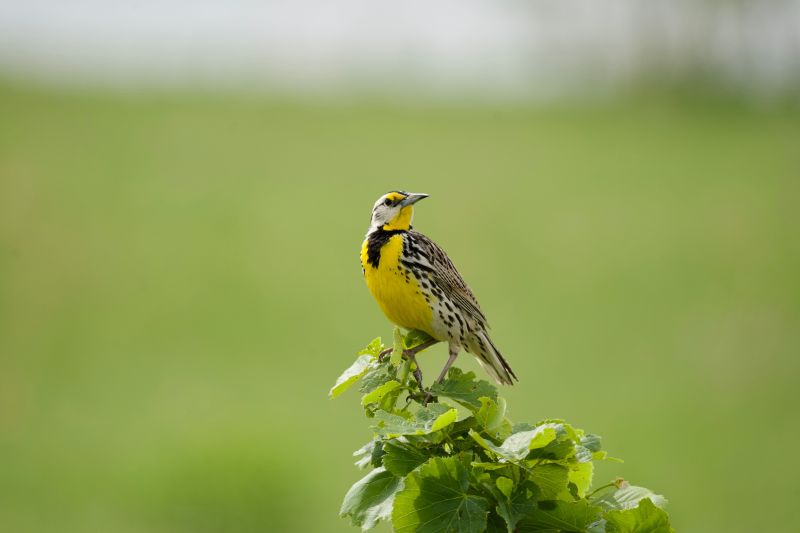
The Eastern Meadowlark is a pretty bird found throughout eastern North America. It has a striking appearance with a bright yellow belly and chest, adorned with a distinctive black “V” shape. The upperparts are streaked brown and white, providing excellent camouflage in their grassland habitats.
These birds are ground nesters, often building their nests in tall grasses and fields. Their song is a sweet, flute-like melody that carries across the meadows, often heard before the bird is seen. Eastern Meadowlarks are known for their elaborate courtship displays, which include singing, fluttering flights, and wing-spreading to showcase their bright plumage. Their diet mainly includes insects, but they also eat seeds and grains, particularly during the winter months. Observing Eastern Meadowlarks in their natural habitat offers a glimpse into the rich biodiversity of grassland ecosystems.
6. Western Meadowlark (Sturnella neglecta)
The Western Meadowlark, the state bird of several western states, is a close relative of the Eastern Meadowlark. It has many physical similarities to its eastern counterpart, including the bright yellow belly and the black “V” on the chest. However, the Western Meadowlark’s song is a complex, melodious series of flute-like notes that distinguish it from the Eastern Meadowlark.
These birds are found in open fields, prairies, and grasslands across western and central North America. They are ground nesters, often weaving their nests in dense grass to provide protection from predators. Western Meadowlarks are highly territorial during the breeding season, with males singing to establish and defend their territories. Their diet consists primarily of insects during the breeding season, but they also feed on seeds and grains in the winter. Watching Western Meadowlarks forage, sing, and interact in their open habitats is a delightful experience for any birdwatcher. Their presence is a sign of healthy grassland ecosystems, and their beautiful songs add a special touch to the natural soundscape.

7. Common Grackle (Quiscalus quiscula)
The Common Grackle is a large, boisterous blackbird found throughout North America. Males have an iridescent black plumage that can show shades of blue, green, and purple in the sunlight. Females are slightly less iridescent but share the same overall dark appearance. These birds are often seen in large flocks, especially during migration and winter.
Because they are highly adaptable, Common Grackles live in various habitats, including woodlands, marshes, urban areas, and agricultural fields. They are known for their loud, harsh calls and their habit of gathering in noisy roosts. Their diet is extremely varied, consisting of insects, small animals, seeds, grains, and even human food scraps. Observing Common Grackles can be fascinating due to their social behaviors and adaptability. They often forage on the ground or in shallow water, using their strong bills to dig and pry for food.
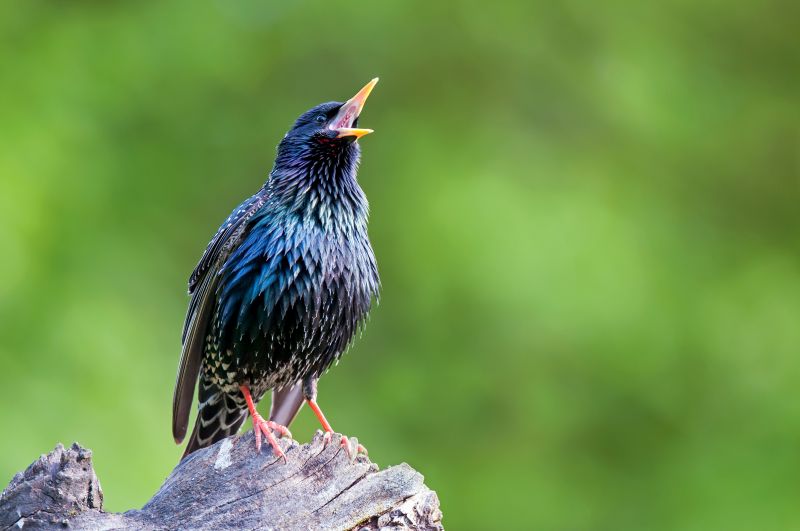
8. European Starling (Sturnus vulgaris)
While it’s an introduced species to North America, the European Starling has become one of the most common and widespread birds on the continent. Adult starlings have glossy black plumage with a greenish and purplish sheen, and their feathers are speckled with white spots during the winter. Juveniles are more uniformly brown.
European Starlings have adapted to living in a wide range of habitats, like farmlands, urban areas, and open fields. They are known for their remarkable vocal mimicry, often incorporating sounds from their surroundings into their songs. Their diet includes insects, fruits, seeds, and a variety of human food. Starlings often forage in large, noisy flocks, creating impressive aerial displays known as murmurations. Watching these murmurations can be a mesmerizing experience, as thousands of birds move in coordinated patterns across the sky.
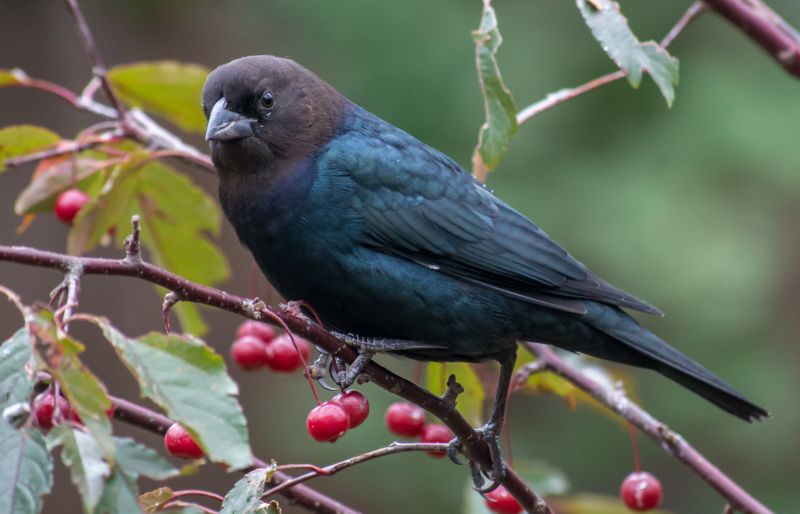
9. Brown-headed Cowbird (Molothrus ater)
The Brown-headed Cowbird is unique among blackbirds due to its brood parasitic behavior. Males have a glossy black body with a brown head, while females are plain brown with lighter streaking on the belly. These birds are found throughout North America, often in open or semi-open habitats like fields, pastures, and forest edges.
Instead of building their own nests, female Brown-headed Cowbirds lay their eggs in nests belonging to other bird species, relying on the host birds to raise their young. This behavior can have significant impacts on the host species, often reducing their reproductive success. Despite this, Brown-headed Cowbirds are an interesting species to observe. They have a diversified diet of insects, seeds, and grains. Their distinctive calls and social interactions provide a unique glimpse into the complex world of avian ecology. Watching cowbirds and learning about their parasitic strategies offers valuable insight into the balance of natural ecosystems.
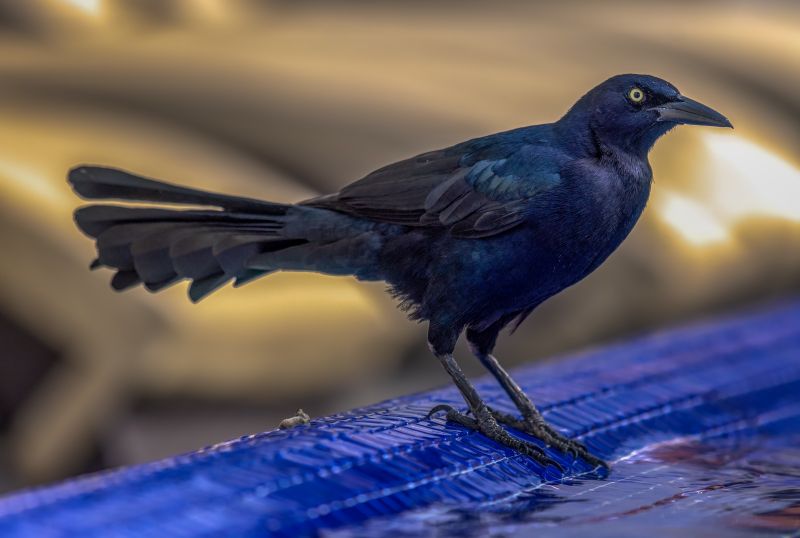
10. Boat-tailed Grackle (Quiscalus major)
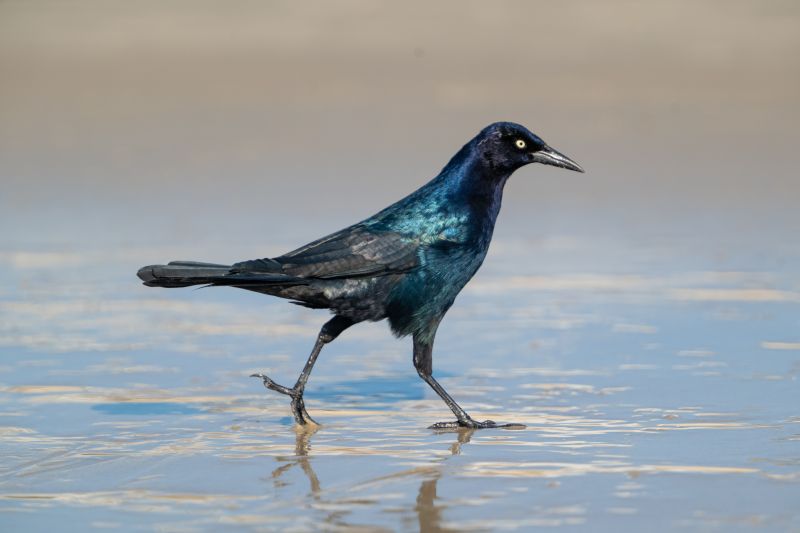
The Boat-tailed Grackle is a striking bird found in coastal areas of the southeastern United States. Males are glossy black with a bluish-purple sheen, long tails that are often held in a distinctive V-shape, and piercing yellow eyes. Females are much smaller and brown with darker wings and tails, making them less conspicuous but equally fascinating.
Boat-tailed Grackles thrive in saltwater marshes, mangroves, and coastal areas and are often seen around human habitats like parks and parking lots. Their loud, varied calls include a mix of harsh cackles, whistles, and clicks. These grackles are highly social and can be observed in large, noisy flocks. Their diet is diverse, consisting of insects, small fish, crustaceans, seeds, and grains. Watching Boat-tailed Grackles forage and interact, especially during their elaborate courtship displays, can be a highlight of birdwatching in coastal regions.
Conclusion
Blackbirds are a diverse and captivating group of birds, each with its own unique characteristics and behaviors. From the melodious songs of the Common Blackbird to the vibrant plumage of the Yellow-headed Blackbird, these species offer endless opportunities for observation and study. Their adaptability to different habitats, from wetlands and grasslands to urban areas, makes them a joy to watch in various settings.
By learning about these ten different kinds of blackbirds, we gain a deeper appreciation for their role in our ecosystems and the importance of preserving their natural habitats. So, next time you’re out birdwatching, keep an eye out for these remarkable birds!