
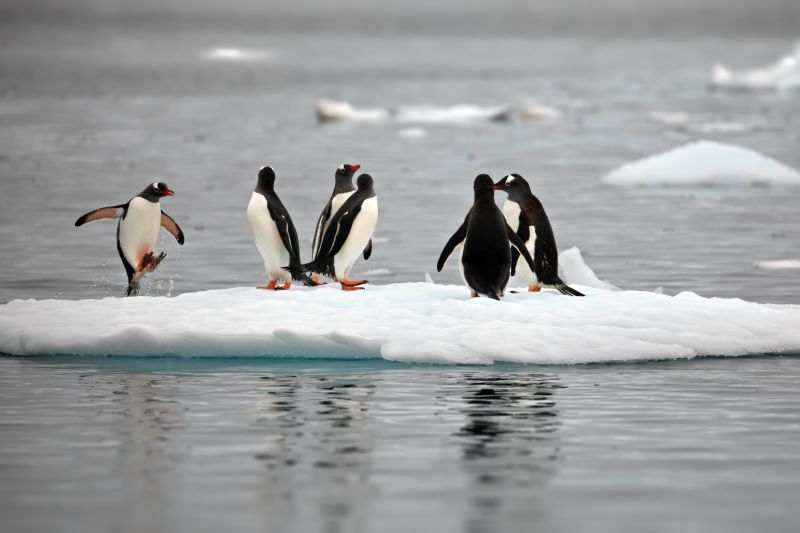
Penguins are among the most fascinating birds on our planet. With their charming waddle and distinctive appearance, they capture our hearts and imaginations. Did you know there are many different species of penguins? Each one has its own unique characteristics and behaviors.
Understanding these differences enhances our appreciation of these incredible creatures. It also helps us recognize the importance of protecting their natural habitats. Whether you are an avid birdwatcher or just starting, learning about penguins is a delightful journey. Let’s dive into the world of penguins and discover our planet’s diverse species.
Antarctic Penguins
1. Emperor Penguin
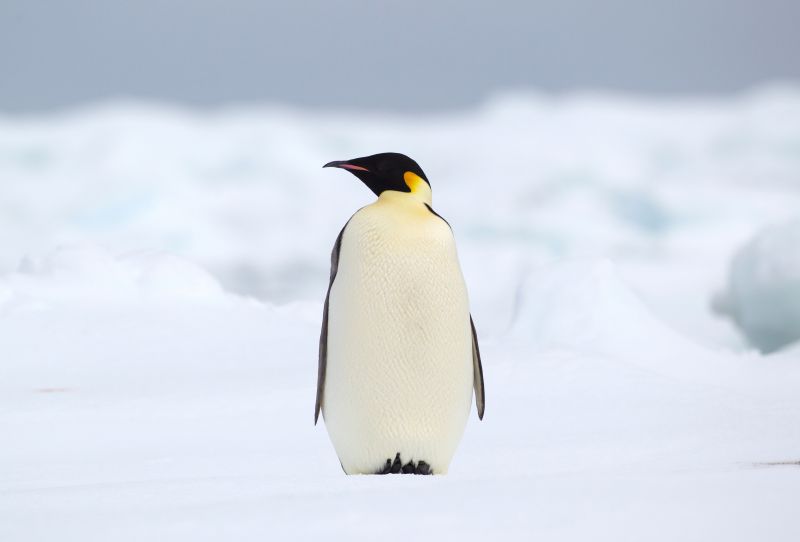
The Emperor Penguin is the largest of all penguin species. Adults stand about 48 inches tall and weigh up to 88 pounds. Their striking appearance includes a black head, chin, and throat, with bright yellow ear patches.
Emperor Penguins live in the coldest environment of any penguin species. They inhabit Antarctica, braving the frigid temperatures of the ice-covered continent. Their diet is largely made up of fish, but they also eat squid and krill.
Breeding is a remarkable aspect of Emperor Penguins. Males incubate the eggs on their feet under their brood pouch (a flap of skin) during the harsh Antarctic winter. This happens during the harsh Antarctic winter. The females return to the sea to feed and replenish their energy. After about two months, the eggs hatch, and the chicks depend on their parents for warmth and food until they are ready to venture out on their own.
2. Adelie Penguin
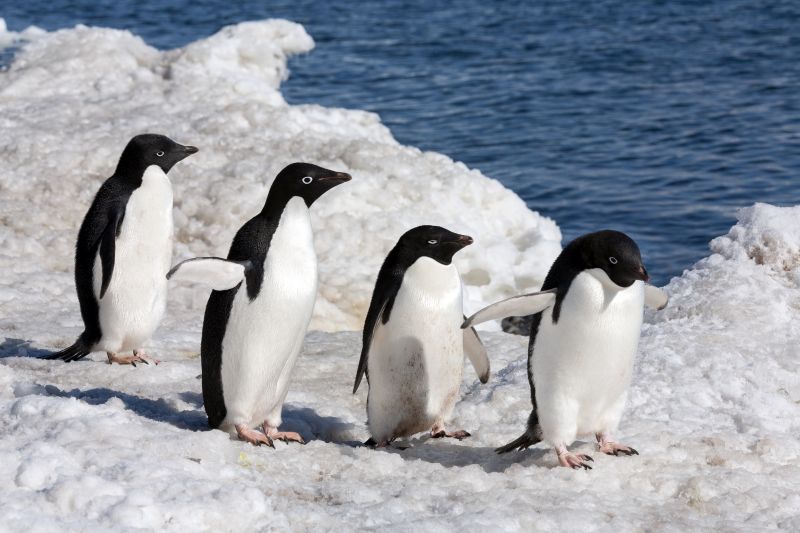
Adelie Penguins are one of the most widespread penguin species in Antarctica. They are small, standing about 27 inches tall and weighing up to 12 pounds. They have a distinctive appearance with a white ring around their eyes and a black head.
Adelie Penguins live on the Antarctic coast and nearby islands. They prefer to eat krill, but their diet also includes fish and squid. These penguins are excellent swimmers, often traveling long distances to find food.
Breeding season for Adelie Penguins is during the Antarctic summer. They build nests out of stones and lay two eggs. Both parents alternate between incubating the eggs and feeding the chicks. The chicks grow fast and are ready to fledge in about two months.
Sub-Antarctic Penguins
3. King Penguin
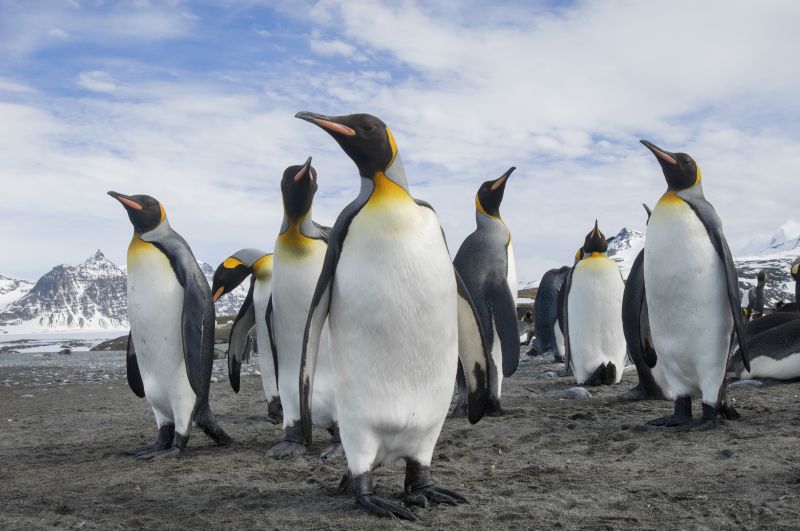
King Penguins are the second-largest penguin species. They are slightly smaller than Emperor Penguins, standing about 37 inches tall and weighing up to 35 pounds. They have vibrant orange patches on their cheeks and a sleek, silver-gray back.
These penguins are found on the sub-Antarctic islands, including South Georgia and the Falkland Islands. King Penguins primarily feed on fish and squid. They often dive to great depths to catch their prey.
Breeding for King Penguins is a lengthy process. It takes around 14 to 16 months to raise a single chick. They do not build nests; instead, they carry their eggs on their feet, similar to Emperor Penguins. Both parents equally share the duties of incubation and feeding.
4. Chinstrap Penguin
Chinstrap Penguins are easily recognizable by the narrow black band under their heads, resembling a helmet strap. They are medium-sized, standing about 28 inches tall and weighing up to 10 pounds. Their bold black and white plumage makes them stand out.
These penguins inhabit the rocky coasts of the Antarctic Peninsula and nearby islands. They thrive in cold, icy waters. While their diet consists mainly of krill, they also eat small fish and other crustaceans.
Chinstrap Penguins are highly social and nest in large colonies. During the breeding season, they build nests from stones and lay two eggs. Both parents take turns finding food and share incubation duties. The chicks hatch after about a month and fledge in two months.

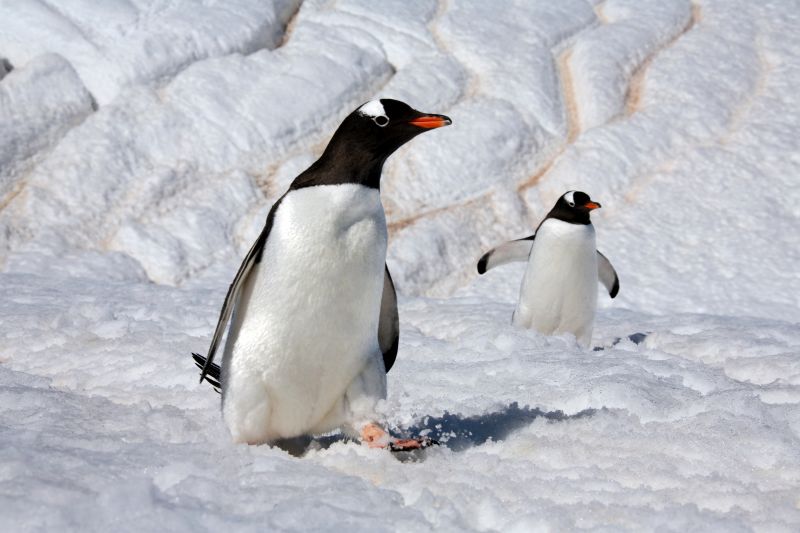
5. Gentoo Penguin
Gentoo Penguins are known for their bright orange beaks and the white patches above their eyes. They are medium-sized, standing about 30 inches tall and weighing up to 14 pounds. Gentoos are the fastest underwater swimmers among penguins, reaching up to 22 miles per hour.
These penguins inhabit sub-Antarctic islands and the Antarctic Peninsula. They prefer coastal areas with rocky or sandy beaches. Their diet largely consists of fish, krill and squid. Gentoo Penguins often forage close to shore but can dive deep if necessary.
Breeding season for Gentoos occurs in the spring and summer. They build circular nests using stones and lay two eggs. The parents share the tasks, taking turns incubating the eggs and feeding the chicks. The chicks fledge after about two months but often return to the nest for additional feedings.
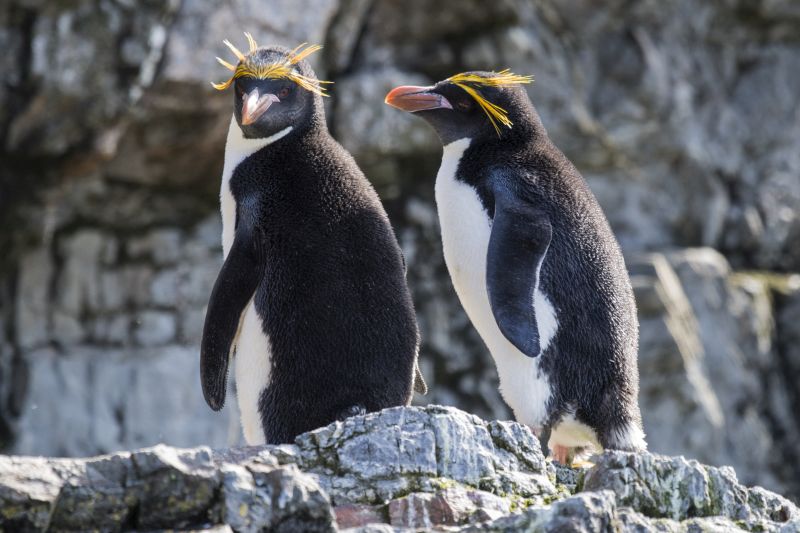
6. Macaroni Penguin
Macaroni Penguins are easily identified by their distinctive yellow-orange crests. They are medium-sized, standing about 28 inches tall and weighing up to 13 pounds. Their black and white plumage and colorful crests make them one of the most striking penguin species.
These penguins inhabit sub-Antarctic and Antarctic regions, including the Falkland Islands and South Georgia. They prefer rocky, coastal areas for breeding. Macaroni Penguins primarily eat krill, but they also consume small fish and squid.
Breeding season for Macaroni Penguins begins in the early summer. They nest in large, crowded colonies on rocky slopes. Both parents equally share the duties of incubation and feeding. The chicks fledge after about two months, ready to start their adventurous lives at sea.
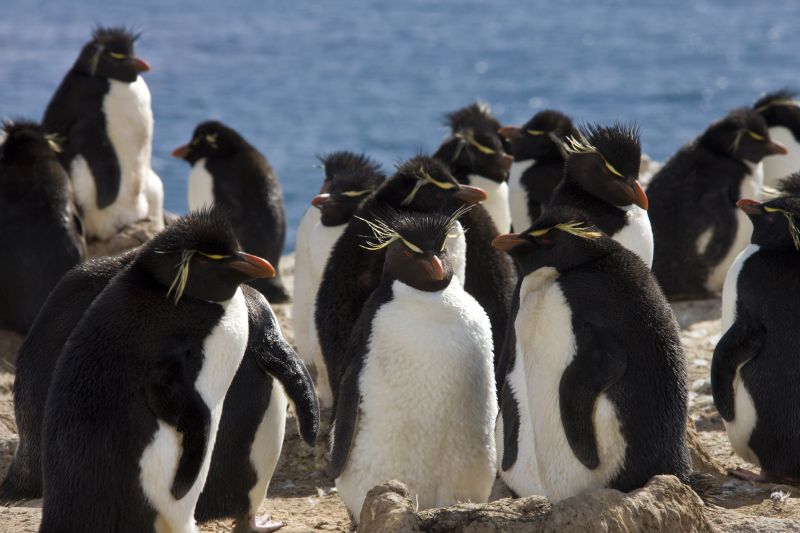
7. Rockhopper Penguin
Rockhopper Penguins are among the smallest penguin species. They’re about 20 inches tall and weigh up to 6 pounds. They are known for their spiky yellow and black crests and bright red eyes. Their bold appearance and energetic behavior make them a favorite among birdwatchers.
These penguins inhabit the rocky shores of sub-Antarctic islands, including the Falkland Islands and Tristan da Cunha. They prefer areas with steep cliffs and rocky outcrops. Their diet mainly consists of krill, squid, and small fish.
Breeding season for Rockhoppers begins in the early summer. They build nests from grass, seaweed, and stones. The parents share the tasks, taking turns incubating the eggs and feeding the chicks. The chicks fledge after about two months and begin their independent lives at sea.
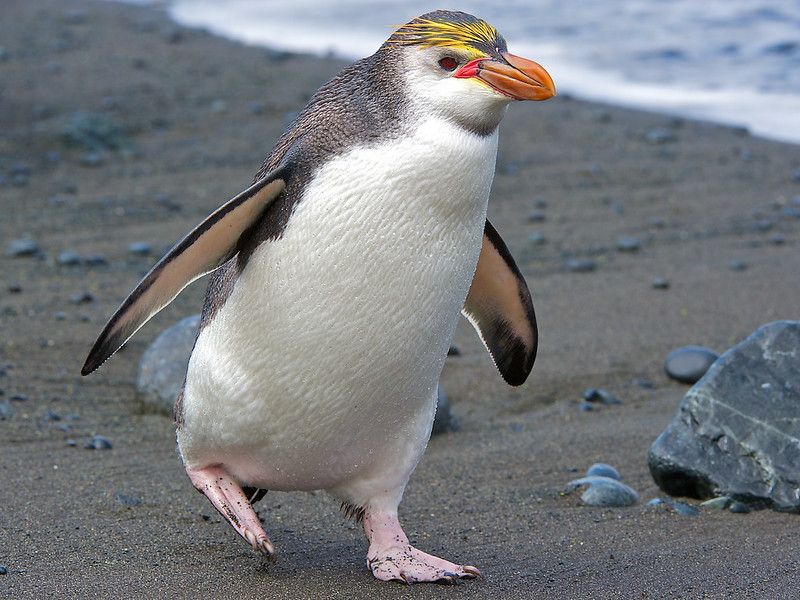
8. Royal Penguin
Royal Penguins are similar in appearance to Macaroni Penguins, with a white face and a distinctive yellow crest. They are approximately 28 inches tall and weigh up to 15 pounds.
These penguins inhabit Macquarie Island and nearby sub-Antarctic islands. They prefer rocky, coastal areas for breeding. Royal Penguins primarily feed on krill, but they also eat small fish and squid.
Breeding season for Royal Penguins begins in September. They nest in large colonies on rocky slopes or beaches. Both parents are equally involved in incubating the eggs and feeding the chicks. The chicks fledge after about two months and begin their journey at sea.
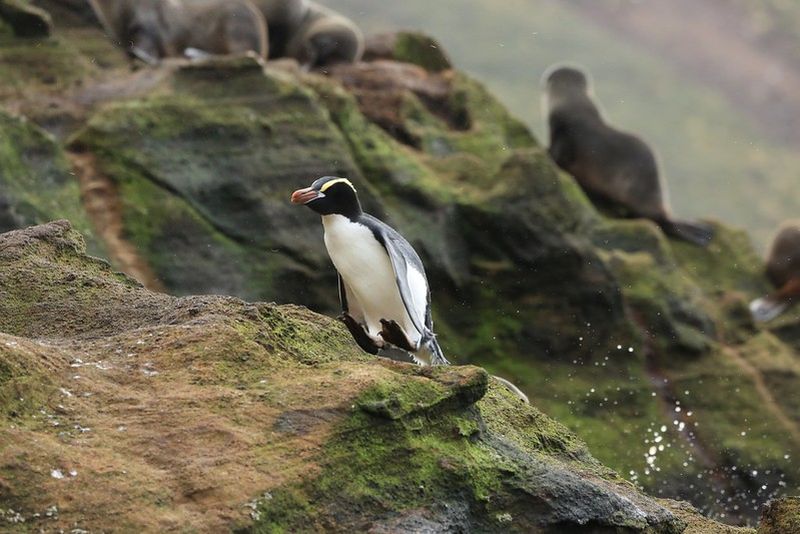
9. Erect-Crested Penguin
Erect-Crested Penguins are medium-sized, standing about 26 inches tall and weighing up to 13 pounds. They have striking yellow crests that stand upright and have a robust build.
These penguins inhabit the sub-Antarctic islands of New Zealand, including the Antipodes and Bounty Islands. They prefer rocky, coastal areas for breeding. Erect-Crested Penguins primarily feed on krill, squid, and small fish.
Breeding season for Erect-Crested Penguins begins in September. They nest in large colonies on rocky slopes. Both parents are equally engaged in incubating the eggs and feeding the chicks. The chicks fledge after about two months and start their journey at sea.
South American Penguins
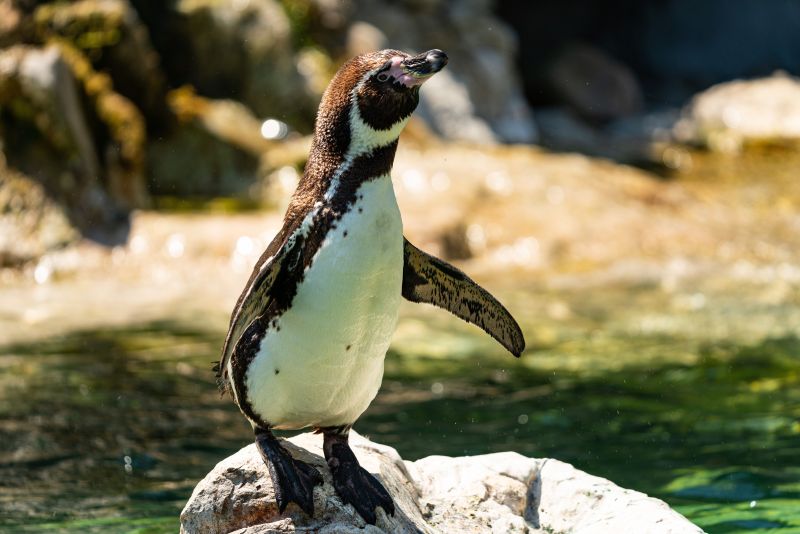
10. Humboldt Penguin
Humboldt Penguins are medium-sized, standing about 26 inches tall and weighing up to 13 pounds. They have a distinctive black band across their chest and a pink base on their beak.
These penguins inhabit the coasts of Peru and Chile, favoring areas with rocky shores and abundant marine life. Humboldt Penguins primarily feed on small fish such as anchovies and sardines.
Breeding season for Humboldt Penguins varies throughout the year. They make their nests in burrows or crevices within the rocks to protect their eggs from predators and the sun. Both parents share incubation and feeding duties. The chicks fledge after about two to three months and start their lives in the ocean.
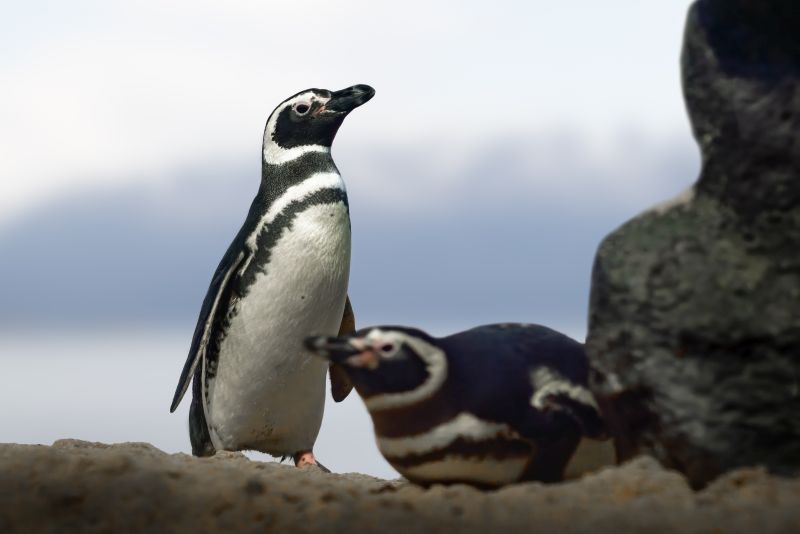
11. Magellanic Penguin
Magellanic Penguins are similar in size to Humboldt Penguins, standing about 24 inches tall and weighing up to 14 pounds. They are characterized by two black bands between their head and chest, with one running in an upside-down horseshoe shape.
These penguins inhabit the coasts of Argentina, Chile, and the Falkland Islands. They prefer coastal regions with sandy or gravel beaches. They eat mainly fish, squid, and crustaceans.
Breeding season for Magellanic Penguins begins in September. They make their nests in burrows or under bushes to protect their eggs. Both parents equally share the duties of incubation and feeding. The chicks fledge after about two months and begin their independent lives at sea.
African Penguins
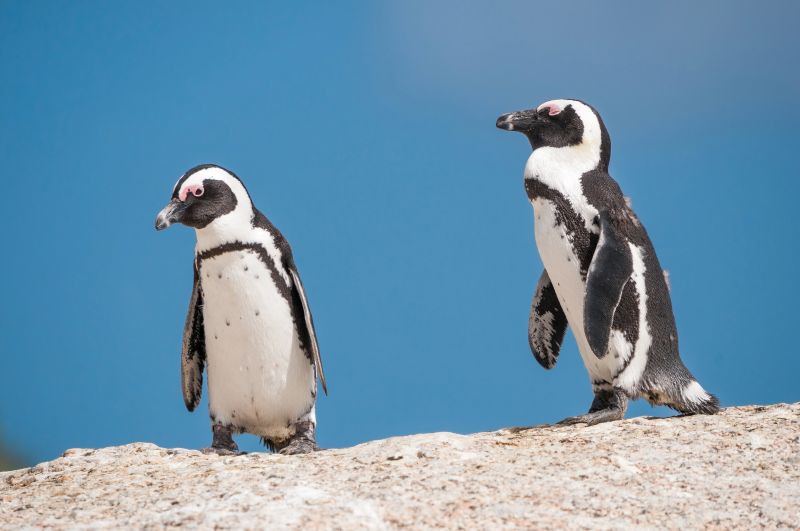
12. African Penguin
African Penguins are medium-sized, standing about 24 inches tall and weighing up to 8 pounds. They have a distinctive black and white pattern with a unique horseshoe-shaped band on their chest. They are also known as Jackass Penguins because of their donkey-like bray.
These penguins inhabit the southwestern coast of Africa, including Namibia and South Africa. They favor coastal regions with either sandy or rocky beaches. Their diet is mostly made up of small fish like sardines and anchovies, but they also eat squid and crustaceans.
Breeding season for African Penguins varies depending on the location. They nest in burrows or under rocks to protect their eggs from the sun. The parents share the tasks, taking turns incubating the eggs and feeding the chicks. The chicks fledge after about two to three months and start their lives in the ocean.
Australian and New Zealand Penguins
13. Little Blue Penguin
Little Blue Penguins are about 13 inches tall and weigh around 2 pounds. They are the smallest penguin species and are also known as Fairy Penguins. Their blue and white plumage gives them a unique and charming appearance.
These penguins inhabit the coastlines of New Zealand and southern Australia. They prefer areas with sandy or rocky shores. Little Blue Penguins feed on small fish, squid, and crustaceans, often foraging close to shore.
The breeding season for Little Blue Penguins varies by location. They nest in burrows or natural crevices. The duties of incubation and feeding the chicks are evenly divided between both parents. The chicks fledge after about eight weeks and begin their independent lives at sea.

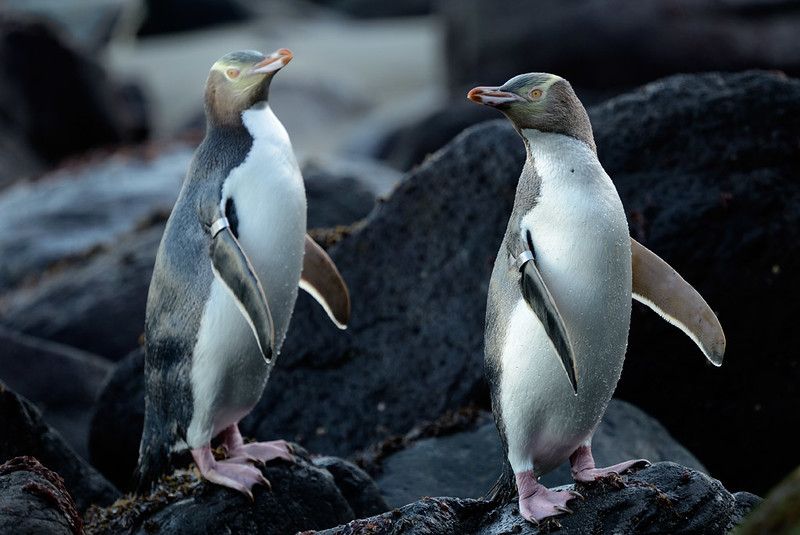
14. Yellow-Eyed Penguin
Yellow-Eyed Penguins are about 24 inches tall and weigh up to 14 pounds, and are one of the rarest penguin species. They have pale yellow eyes and a band of yellow feathers extending from their eyes around the back of their heads.
These penguins inhabit the southeastern coast of New Zealand and the sub-Antarctic islands. They prefer forests and shrubland near the coast. Yellow-Eyed Penguins primarily feed on fish, including blue cod and red cod, but they also eat squid.
Breeding season for Yellow-Eyed Penguins begins in late August. They nest in secluded areas, often hidden among vegetation. The parents take turns handling incubation and feeding duties for the chicks. The chicks fledge after about three months and start their lives in the ocean.
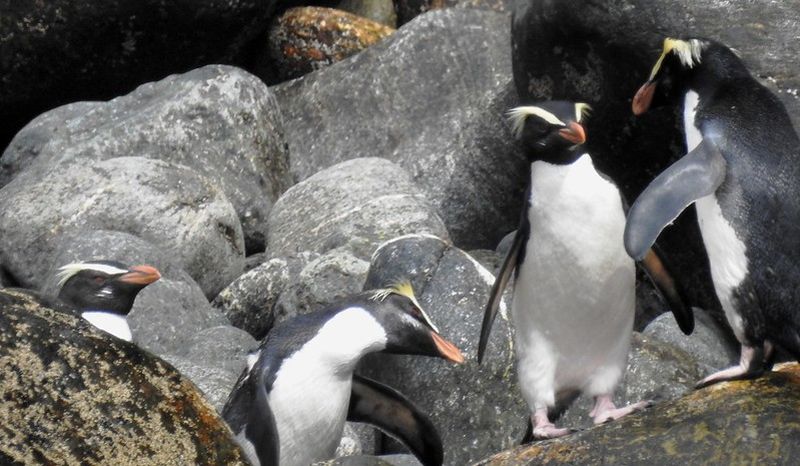
15. Fiordland Penguin
Fiordland Penguins, also known as Tawaki, are medium-sized penguins standing about 24 inches tall and weighing up to 9 pounds. They have a distinctive yellow crest and a robust build.
These penguins inhabit the rugged coastlines and rainforests of New Zealand’s Fiordland and Stewart Island. They prefer dense forests and rocky areas near the coast. Their primary diet consists mainly of fish, squid, and crustaceans.
Breeding season for Fiordland Penguins starts in July. They nest in dense vegetation or under rocks to protect their eggs from predators. Incubation of the eggs and feeding of the chicks duties are evenly shared between both parents. The chicks fledge after about two to three months and begin their journey at sea.
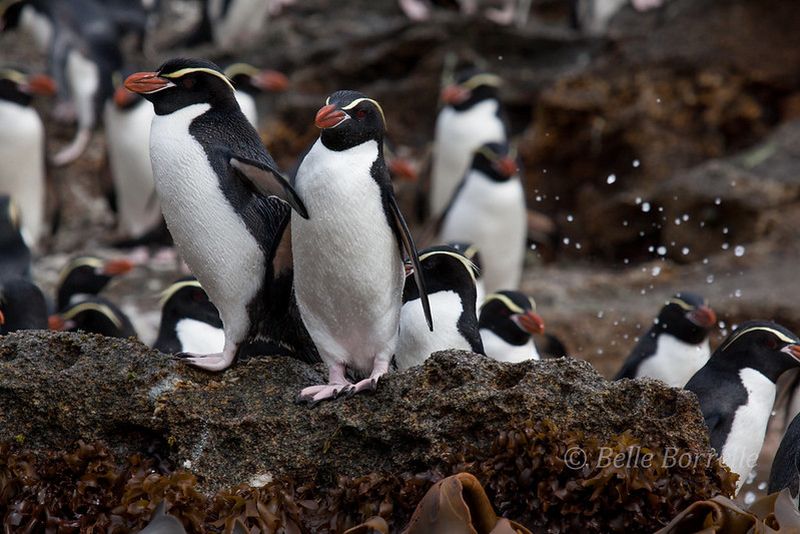
16. Snares Penguin
Snares Penguins are medium-sized, standing about 25 inches tall and weighing up to 8 pounds. They are easily recognizable by their yellow crests and a distinctive black stripe on their face.
These penguins inhabit the Snares Islands, located south of New Zealand. They prefer densely vegetated areas close to the coast for breeding. Snares Penguins primarily feed on krill, small fish, and squid.
Breeding season for Snares Penguins begins in September. They nest in dense colonies, often under the cover of trees or shrubs. The tasks of incubating the eggs and feeding the chicks are shared between both parents. The chicks fledge after about two to three months and head out to sea.
17. White-Flippered Penguin
White-Flippered Penguins are a small subspecies of the Little Blue Penguin, standing about 13 inches tall and weighing around 2 pounds. They have distinctive white flippers, which set them apart from their relatives.
These penguins inhabit the coastal regions of New Zealand, particularly around the Canterbury region. They prefer areas with sandy or rocky shores. Their diet is largely made up of small fish, squid, and crustaceans.
Breeding season for White-Flippered Penguins varies by location. They nest in burrows or natural crevices. Both parents share the responsibilities of incubation and feeding equally. The chicks fledge after about eight weeks and begin their independent lives at sea.


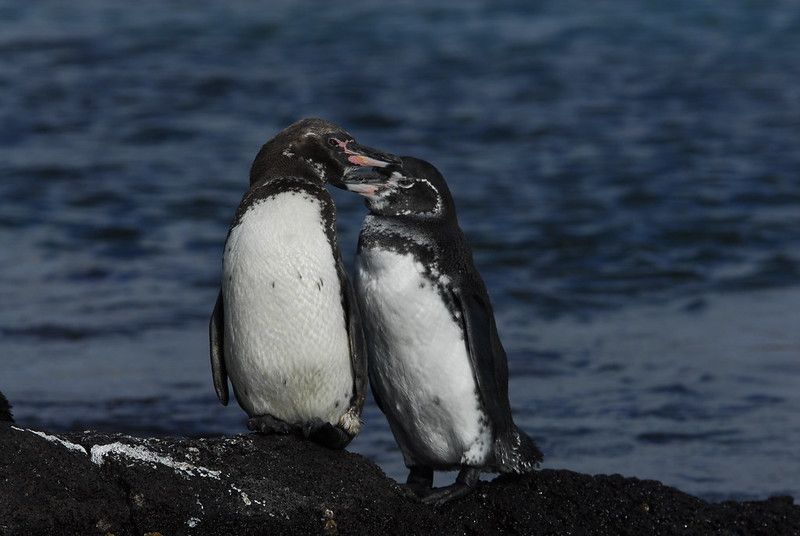
18. Galápagos Penguin
Galápagos Penguins are the only penguin species that live near the equator. They are small, standing about 19 inches tall and weighing up to 5.5 pounds. They have a thin white line that runs from their eyes to their chin.
These penguins inhabit the Galápagos Islands, primarily on Fernandina Island and the west coast of Isabela Island. They prefer areas with sandy or rocky shores and eat mainly small fish, squid, and crustaceans.
Breeding for Galápagos Penguins can occur year-round due to the stable climate. They nest in caves or crevices in the lava rocks. Both parents take equal responsibility for incubating and feeding. The chicks fledge after about two months and start their lives at sea.
Conservation Status
Penguins face numerous threats that impact their populations. Climate change, overfishing, and habitat destruction are significant concerns. Oil spills and plastic pollution also pose severe risks to their survival.
Many penguin species are classified as vulnerable or endangered. Conservation efforts are crucial to protect these remarkable birds. Various organizations are working to safeguard penguin habitats, enforce fishing regulations, and clean up polluted areas.
Participating in these efforts can have a significant impact. By raising awareness and taking action, we can help ensure that penguins continue to thrive in their natural environments. As birdwatchers, we have a unique opportunity to advocate for these incredible creatures and their habitats.
Conclusion
So, how many penguin species are there in the world? We’ve explored 18 unique and fascinating species, each with its own distinctive characteristics and habitats. From the towering Emperor Penguins of Antarctica to the charming Little Blue Penguins of New Zealand and Australia, penguins have adapted to a wide range of environments across the Southern Hemisphere.
Understanding the diversity of penguin species enriches our appreciation of these incredible birds and highlights the importance of conservation efforts to protect them. Many penguin species face significant threats from climate change, overfishing, and habitat destruction. As birdwatchers and nature enthusiasts, we can play a vital role in supporting conservation initiatives.
By raising awareness, supporting organizations dedicated to wildlife conservation, and advocating for sustainable practices, we can help ensure that penguins continue to thrive in their natural habitats. Let’s celebrate the beauty and resilience of penguins and work together to protect these remarkable creatures for future generations to enjoy.