

Today, let’s delve into a fascinating avian mystery: penguins and their wings. Penguins are extraordinary creatures, known for their distinctive black and white plumage and their remarkable adaptations to life in the icy waters of the Southern Hemisphere. But have you ever wondered why, despite having wings, penguins cannot fly? It’s a question that often piques curiosity among birdwatchers and nature lovers alike.
Penguins belong to a unique family of birds called Spheniscidae. Found primarily in the southern regions, from Antarctica to South America and Africa, these flightless birds have captured the hearts of many with their playful antics on land and graceful swimming prowess in the sea. Their wings, although resembling those of flying birds, serve a different purpose altogether.
As we explore the anatomy and unique adaptations of penguin wings, we’ll uncover the reasons behind their inability to take to the skies. Join us on this journey into the fascinating world of penguins, where every feather tells a story of adaptation and survival in one of the harshest environments on Earth.
Understanding Penguin Wings
Penguin wings are marvels of evolution, finely tuned for life underwater. Unlike the wings of flying birds, which are lightweight and aerodynamic for soaring through the air, penguin wings are robust and adapted for swimming. Their bones are dense and heavy, providing strength and stability rather than the lightness required for flight.
These wings play a crucial role in the penguin’s ability to navigate the ocean depths with agility and precision. The bones and muscles within the wings allow for powerful strokes, propelling them through the water at impressive speeds. This propulsion is essential for chasing down fish, squid, and other prey that form the core of their diet.
Feathers cover every inch of a penguin’s wings, contributing not only to their streamlined shape but also to their insulation. Each feather is densely packed and overlaid with a waterproof coating, ensuring minimal water absorption during dives. This adaptation allows penguins to maintain their body heat and energy reserves, even during prolonged periods underwater.
While penguins cannot fly, their wings are integral to their survival and reproductive success. During mating season, males often use their wings in elaborate courtship displays, showcasing their fitness and attractiveness to potential mates. These displays involve intricate movements and vocalizations, highlighting the versatility and importance of penguin wings beyond swimming.

Flight Capability in Penguins
Understanding why penguins cannot fly is rooted in their physical and biomechanical adaptations. Penguins’ bodies are adapted for a life primarily in water rather than in the air. One of the key factors limiting their flight capability is their body size and weight. Penguins are relatively large and heavy birds compared to their flying counterparts, which affects their ability to achieve lift and sustain flight.
Biomechanically, penguin wings are designed for swimming rather than flying. Unlike the wings of flying birds, which are elongated and optimized for generating lift, penguin wings are shorter, stiffer, and more flattened. These adaptations help them navigate underwater efficiently but do not provide the necessary aerodynamic lift required for sustained flight.
The shape and structure of penguin wings differ significantly from those of flying birds. While flying birds have wings with a streamlined, aerodynamic profile, penguin wings are more suited for generating thrust in water. This structural difference reflects their adaptation to the aquatic environment, where efficient swimming and diving are essential for survival.
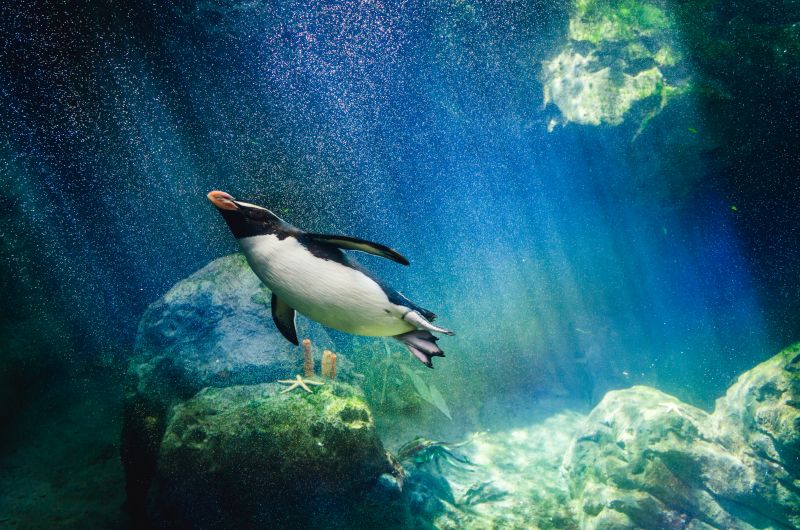
Despite their inability to fly, penguins have remarkable swimming abilities that rival those of marine mammals. Their streamlined bodies, coupled with powerful wing strokes and webbed feet, enable them to propel themselves through the water with speed and agility. This adaptation allows penguins to thrive in the ocean, where they pursue prey and evade predators with remarkable skill.
Factors Affecting Flight in Penguins
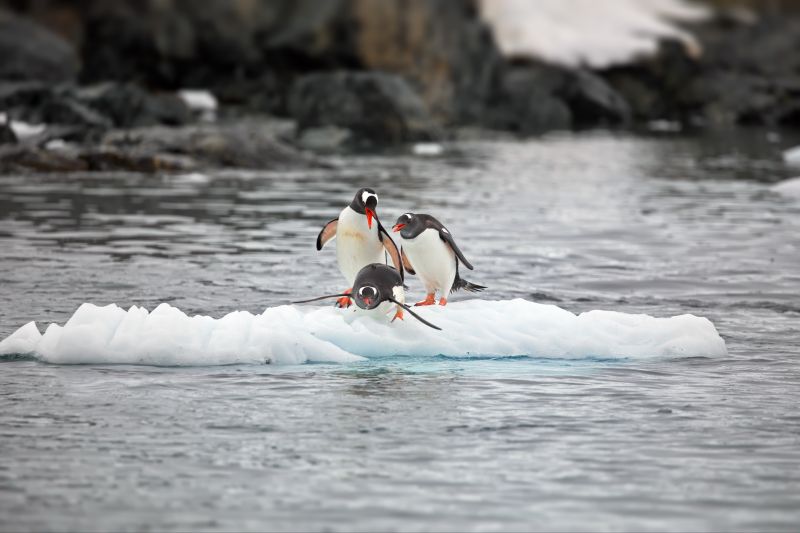
The flightlessness of penguins is influenced by several factors, primarily related to their physical attributes like their size and weight. Penguins are relatively large and heavy birds, which makes achieving and sustaining flight impossible.
Aerodynamically, penguin wings are not designed for efficient flight. Unlike the wings of flying birds, which are elongated and tapered to reduce drag and maximize lift, penguin wings are shorter and more adapted for underwater propulsion. This structural difference limits their ability to generate the aerodynamic forces needed to achieve sustained flight in the air.
Biomechanically, penguin wings are optimized for underwater navigation rather than aerial maneuverability. Their wings are adapted for generating thrust through the water with strong, rapid strokes. This adaptation is crucial for hunting prey and evading predators in their marine habitat but does not translate well to the demands of sustained flight in the air.
Penguin Adaptations for Survival
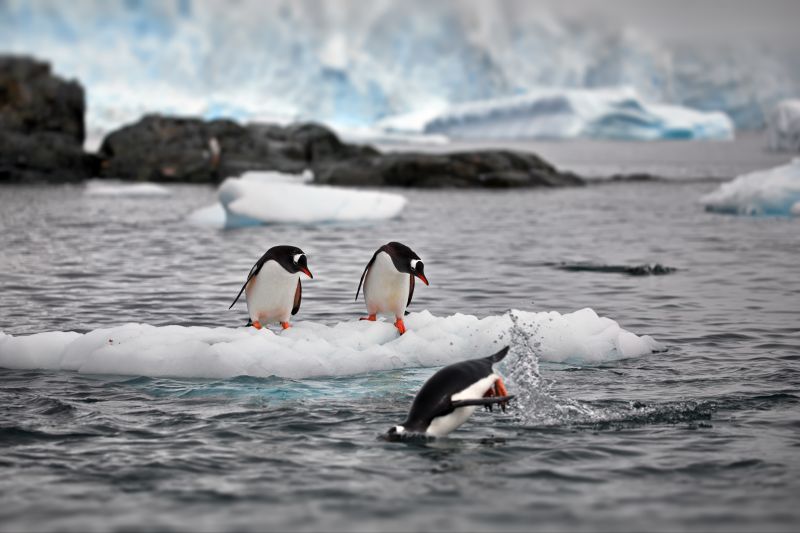
Penguins have a unique suite of physical capabilities that enable them to thrive in their harsh, icy environments. Central to their survival strategy is their remarkable ability to swim and dive. Penguins’ streamlined bodies and flipper-like wings allow them to navigate underwater with exceptional agility and efficiency. These adaptations are essential for hunting fish, squid, and krill—their diet’s primary components—in the Southern Hemisphere’s cold waters.
Feathers play a crucial role in penguins’ adaptations for survival. Their dense plumage, consisting of overlapping, waterproof feathers, provides excellent insulation against the frigid temperatures of their habitat. These feathers trap a layer of air close to the skin, reducing heat loss and maintaining their core body temperature—a vital adaptation for surviving in icy waters and harsh Antarctic winds.
Penguins’ adaptations for underwater life extend to their physiology and behavior. They have large lung capacity and high myoglobin levels in their muscles, allowing them to hold their breath for long periods during deep dives. This physiological adaptation enables penguins to dive to great depths in search of food, often reaching depths of 100 meters or more, depending on the species.
Behaviorally, penguins exhibit remarkable social structures and nesting behaviors that enhance their chances of survival. Many penguin species form large colonies during breeding season, providing protection from predators and harsh weather conditions. They also engage in cooperative behaviors, such as communal chick-rearing and huddling, which help conserve body heat and energy in their challenging environment.
Comparing Penguins to Flying Birds
Comparing penguins to flying birds reveals striking differences in anatomy, behavior, and ecological niche. One of the most noticeable distinctions is in their wing structure. Flying birds typically have elongated, aerodynamically shaped wings designed for efficient flight. These wings generate lift and reduce drag, allowing flying birds to soar through the air with ease.
In contrast, penguins have shorter, more flattened wings that are adapted for underwater propulsion rather than flight. These wings are equipped with strong muscles and dense bones, enabling penguins to propel themselves through the water with powerful strokes. While effective for swimming and diving, penguin wings lack the aerodynamic efficiency required for sustained flight in the air.
Ecologically, the differences between penguins and flying birds are also significant. Depending on their species, flying birds inhabit a vast range of habitats, from forests and grasslands to deserts and mountains. They rely on flight for foraging, escaping predators, and migrating over long distances, allowing them to exploit diverse food sources and environmental niches.
In contrast, penguins are highly specialized for life in the marine environment. They are found primarily in the cold waters of the Southern Hemisphere, where they feed on fish, squid, and krill. Penguins’ adaptations for swimming and diving have enabled them to exploit the rich marine resources of their habitat efficiently. Their dependence on aquatic ecosystems sets them apart from flying birds, whose habitats and foraging behaviors are more diverse.
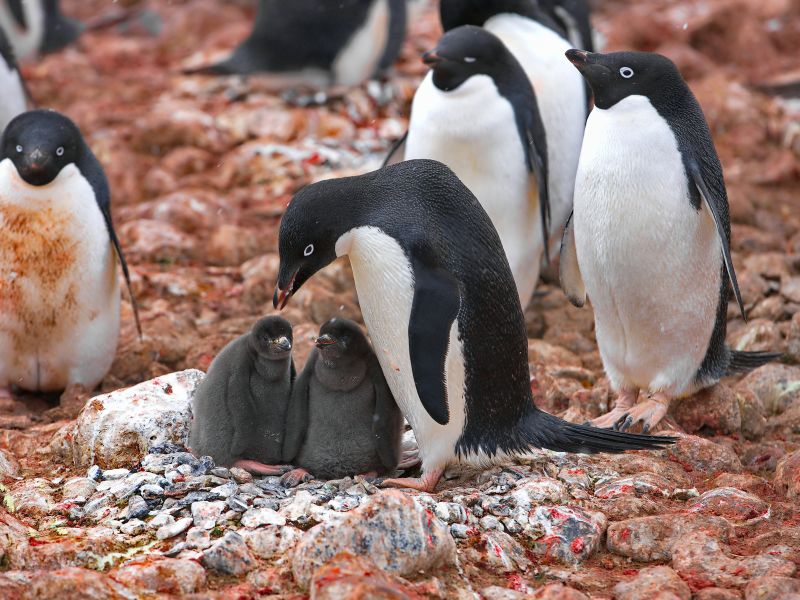
Behaviorally, penguins exhibit unique social structures and reproductive strategies that differ from those of flying birds. Many penguin species form large colonies during breeding season, where they engage in courtship displays, nest-building, and chick-rearing activities. These communal behaviors provide protection, support, and social interaction—a stark contrast to the often solitary or small-group behaviors of many flying bird species.
Conclusion
Exploring the unique adaptations and characteristics of penguins has revealed an intriguing story of adaptation and survival in one of the Earth’s most challenging environments. While not suited for flight, their wings play crucial roles in courtship displays, thermoregulation, and underwater locomotion—a testament to the versatility of evolutionary adaptations. Despite having wings, penguins are masterful swimmers rather than fliers. Their robust bodies, streamlined wings, and dense plumage are finely tuned for life in the icy waters of the Southern Hemisphere, where they excel at hunting prey and navigating the depths.
As we conclude our exploration into why penguins, despite having wings, cannot fly, we gain a deeper appreciation for the complexities of avian biology and the diversity of life on our planet. From their Antarctic strongholds to the subantarctic islands, penguins continue to captivate and inspire with their resilience and unique adaptations.