

Colorado is a great place for bird watching! Many different types of birds can be found in this state, both common and rare. In this blog post, we will take a look at some of the most common backyard birds in the state. These birds are easy to spot, and they provide hours of enjoyment for bird watchers of all levels. So if you’re looking to add some new feathered friends to your backyard, read on!
What are some of the most common Colorado backyard birds?
1. Red-winged Blackbird

The Red-winged Blackbird is a species of true blackbird that breeds in North America. The male has black plumage with red epaulets on the wing, while the female is dark brown with streaked upperparts. Both sexes have yellow eyes and bill. Red-winged Blackbirds are found in wet marshy areas in the boreal forest region of Canada and the northern United States.
The Red-winged Blackbird is a permanent resident in the southern parts of its range, from British Columbia to southern Quebec, the Great Lakes region, and south to North Carolina. Birds in the western part of the Red-winged Blackbird’s range migrate to the southwestern United States and Mexico, while those in the east mostly migrate to the Gulf Coast states.
The Red-winged Blackbird is omnivorous, eating insects, earthworms, berries, and grains. The male sings a loud whistled song in flight or from a perch to proclaim his territory and attract a mate.
2. Mountain Bluebird
The Mountain Bluebird is a small thrush that is found in the western United States and Canada. In Colorado, they are most often seen in the spring and summer months. These birds get their name from their bright blue plumage.
Mountain bluebirds are mostly insectivores, but they also eat berries and other fruits. They nest in cavities in trees or cliffs, and will often use old woodpecker holes. If you see a Mountain Bluebird in your backyard, you can be sure that there are plenty of insects for them to eat!
The male Mountain Bluebird is a brighter blue than the female, with a white belly and black wings. The female is more grayish-blue, with a light blue or gray belly. Both sexes have dark eyes.
Nesting usually occurs in May or June. The female builds the nest, which is a cup of grass, moss, twigs, and leaves lined with hair or feathers. She will lay between three and seven eggs, which hatch after about two weeks. Both parents feed the young birds until they are old enough to fend for themselves.
3. Brown Bird
The Brown Bird is a common backyard bird in Colorado. They are small birds with brown feathers and a white belly. Brown Birds are known for their migration habits. Every year, they travel south to escape the cold weather. Their unique diet consists of insects, berries, and seeds.
Brown Birds are friendly and enjoy being around people. If you see one in your backyard, be sure to give it some food!
The male and female Brown Birds are different in size. The male is larger than the female. Male Brown Birds have a black cap on their heads, which the females do not have, The females have a brown stripe on their head. Both male and female Brown Birds have white bellies. The males and females also sing different songs, with the male singing a higher-pitched song than the female. If you hear a Brown Bird singing in your backyard, it’s likely a male.
4. Lark Bunting
The state bird of Colorado is the Lark Bunting. These birds are a symbol of the state’s western heritage and can be found in open spaces throughout the state. Lark Buntings are known for their black and white plumage, as well as their melodious song.
Male and female lark buntings can be distinguished by their plumage. Male lark buntings have black plumage with white stripes on their wings. Female lark buntings have brown plumage with streaks of white. Both sexes have a white belly and a black tail. Lark buntings are monogamous and mate for life. The male bird builds the nest and the female incubates the eggs. Lark buntings typically lay three to five eggs per clutch.
Lark Buntings are a common backyard bird in Colorado. They migrate to Colorado in the springtime and can be seen in open fields and meadows. Their diet consists of insects, seeds, and berries.
The Lark Bunting is a protected species in Colorado and is considered to be an important part of the state’s ecosystem.
5. Black Capped Chickadee
The Black Capped Chickadee is a common backyard bird in Colorado. They are small birds with black heads and gray bodies. Chickadees are known for their cheerful songs. These birds are often seen flocking together in trees. Black Capped Chickadees eat insects, seeds, and berries. You can attract them to your yard by providing bird feeders and nesting boxes.
Males and female Black Capped Chickadees look alike, but males usually have a slightly darker cap. Chickadees mate for life and often stay in the same area year-round. These birds typically lay six to eight eggs per clutch. Black Capped Chickadees are cavity nesters, so they will use nest boxes or natural cavities in trees.
6. Mountain Chickadee
The Mountain Chickadee is a small songbird with a large head and short tail. They are found in the Rocky Mountains of Colorado and Wyoming. Their diet consists of insects, spiders, and other small invertebrates. Mountain chickadees are known for their acrobatic skills, often hanging upside down while foraging for food.
They are year-round residents in most of Colorado, but some may migrate to lower elevations in winter. These birds typically form pairs during the breeding season and will maintain their territories throughout the year. Both parents help care for the young chicks until they are ready to leave the nest on their own.
Mountain Chickadees are important members of the forest ecosystem, often acting as indicators of environmental health.
7. American Crow

The American Crow is a large bird that can be found in many parts of the United States, including Colorado. These birds are known for their black feathers and cawing calls. American Crows typically eat insects and small animals, but they will also scavenge for food.
In Colorado, American Crows can be seen year-round as they do not migrate.
Crows are considered the cleverest of all birds and animals.
8. Eurasian Collared Dove
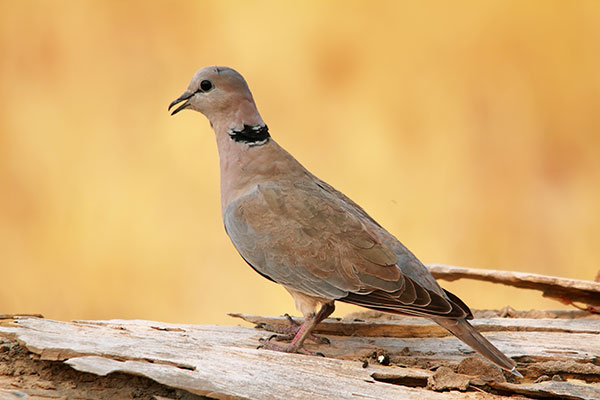
The Eurasian Collared Dove is a relatively new arrival to Colorado, first being spotted in the state in the early 1980s.
These doves are easily distinguished from other dove species by the black collar on the back of their necks. Eurasian Collared Doves are very adaptable and can be found in a variety of habitats, including urban and suburban areas. They are typically seed eaters, but they will also eat insects and berries.
Eurasian Collared Doves typically mate for life and build their nests in trees or on ledges. These doves are very social birds and often flock together in large groups.
9. Mourning Dove

Mourning doves are small songbirds that live in North America and can be seen perching on telephone wires. They are very sensitive to habitat changes and can be found in rural and suburban areas throughout the year. They are primarily granivores and forage for seeds on the ground; their flight is fast and bullet straight.
Their soft, drawn-out calls sound like a lament, hence the name “Mourning Dove”.
Graceful and slender-tailed, with a small-head, Mourning Doves are light gray and brown and generally muted in color. Males and females are similar in appearance. The Mourning Dove species is generally monogamous.
10. House Finch

House finches are common backyard birds that can be found in Colorado. These birds are small, with a body length of about 5 inches. They have a reddish-brown coloration, and their wings are black and white. House finches are migratory birds, and they typically winter in the southern United States. These birds mostly eat seeds, but they will also eat insects and fruit.
Male and female house finches look very similar, but the males have a brighter red coloration, and they are typically larger than females. Additionally, male house finches have a larger beak relative to their body size. This beak is used for breaking open seeds to eat.
11. Purple Finch
The Purple Finch is a small songbird that is common in backyards across Colorado. These finches are most easily identified by their purple plumage and their distinctive song.
Male and female Purple Finches can be distinguished by their plumage. Male finches have bright purple bodies with red heads, while females are duller in coloration. Both sexes have brown streaks on their wings and tails. Females also tend to be smaller than males.
Purple finches are typically seen in the spring and summer months, as they migrate north to breed. Purple Finches are seed eaters, and will often visit bird feeders in search of food.
They typically nest in trees, building cup-shaped nests out of twigs, leaves, and grasses. These birds will often reuse the same nesting site year after year.
12. Northern Flicker
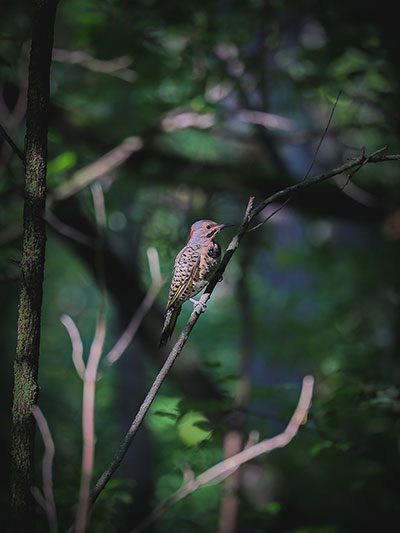
These handsome woodpeckers are the only member of their family to commonly perch on trees rather than clinging to them. You might see a Northern Flicker in your backyard, as they’re one of the most common birds in Colorado. They are also distinguishable by their characteristic red breast and black belly band. The male has a red mustache mark, which the female lacks. Both sexes have a brown back with black bars. Their wings show yellow underparts when they fly. These birds are relatively large woodpeckers, measuring about 11 to 13 inches long with a 20-inch wingspan.
Flickers eat mainly ants and beetles, which they find by probing beneath the ground with their long tongues. In winter, they also eat fruits and nuts. You can attract Northern Flickers to your yard by putting out a suet feeder or a platform feeder with whole nuts, such as peanuts.
These birds are year-round residents in Colorado, but they do migrate south in the winter. If you live at lower elevations, you might see them moving through your area on their way to warmer locations. You’re most likely to see Flickers in early spring and fall during migration season. Keep an eye out for these beautiful birds!
13. American Goldfinch

American Goldfinches can be found in Colorado during the summer months. They are very social birds and can be found in flocks of up to several hundred birds.
American Goldfinches are small, bright yellow birds that are easy to spot in the wild. Male American Goldfinches have a black cap and a black bib, while females have a brown head and no bib. Males are also slightly larger than females.
They typically eat seeds, but they will also eat insects and other small prey. These birds are common in open areas with trees or shrubs, such as parks, gardens, and golf courses.
14. Broad-tailed Hummingbird

The Broad-tailed Hummingbird is one of the most common backyard birds in Colorado. These birds typically migrate to Colorado in late April or early May. They will spend the summer months in the state before heading south again in late September or early October. During their time in Colorado, Broad-tailed Hummingbirds can be found in a variety of habitats including forests, meadows, and even urban areas.
These beautiful little birds are easily identified by their distinctive tail feathers. They are also known for their high-pitched twittering calls. In addition to being found in backyards, these hummingbirds can also be seen in parks and gardens.
Male and female Broad-tailed Hummingbirds can be distinguished by their plumage. Male birds have green upperparts, with some white on their flanks. They also have a reddish wash on their throats and breast. Females are similar in coloration, but they tend to be duller overall. Both sexes have broad tails with white tips.
15. Blue Jay
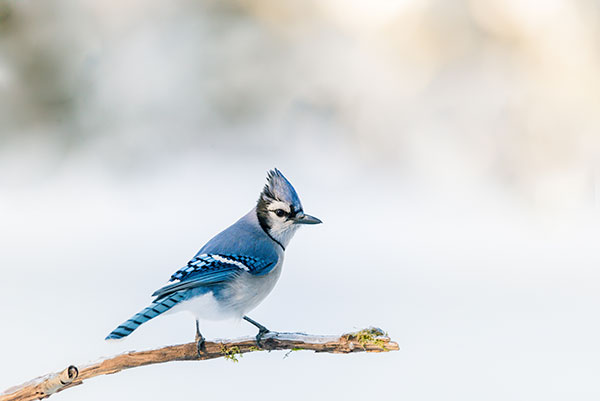
The beautiful Blue Jay is also a common backyard bird in Colorado. These lovely birds are known for their bright blue plumage and loud calls. They are intelligent birds that can mimic the calls of other animals. They are also known to be good at hiding food, which makes them interesting to watch.
Blue Jays typically eat insects and nuts. If you’re lucky, you might even see a blue jay eating a snake! These birds are fun to watch and are sure to add some color to your backyard.
Male and female blue jays look very similar. The best way to tell them apart is by their call. Male blue jays have a higher-pitched call, while the female’s call is lower-pitched. Another difference between the sexes is that male blue jays typically have darker plumage than females.
16. Steller’s Jay
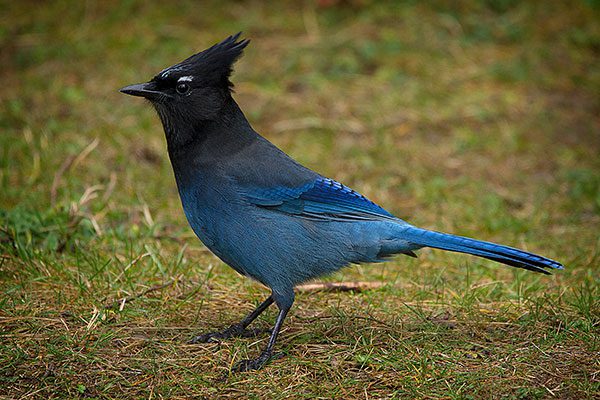
The Steller’s Jay is a member of the crow and jay family. It is a striking bird with a blue body and black head, wings and tail.
The Steller’s Jay is found in the mountains of Colorado where it breeds during the summer months. It feeds on insects, berries and nuts. In winter, they migrate to lower elevations in search of food.
The males and females look similar, the differences being that the male is slightly larger than the female and has a blue crest, whereas the female has a brown crest.
17. Dark Eyed Junco
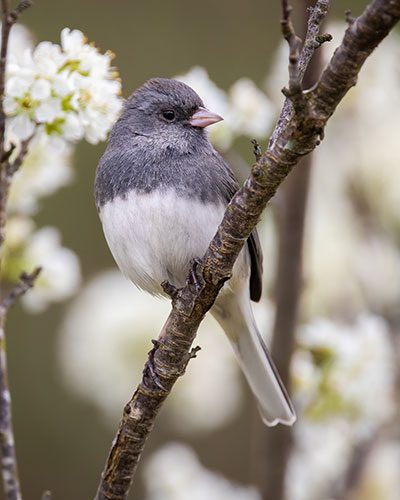
Dark-eyed Juncos are the most common backyard bird in Colorado.
These little birds are sparrow-sized with gray upperparts, and white underparts. They have a dark gray hood and a white throat. You can often find them hopping around on the ground looking for seeds. In winter, they form large flocks and can be seen in open areas like parks and fields.
The males and females look similar, but the males have a dark gray hood while the females have a brown hood. The female also has a streaked back.
18. Western Kingbird
The Western Kingbird is a fairly common sight in Colorado backyards, especially during their migration season. These birds are known for their aerial insect-catching abilities, and they often eat bees, wasps, and other flying insects. Western Kingbirds typically migrate to Colorado in late April or early May.
The males and females look fairly similar, with both having gray upperparts, and white underparts. However, the male bird has a reddish wash on its breast, while the female does not. Male birds also tend to be slightly larger than females.
19. Black-billed Magpie
The Black-billed Magpie is a striking bird and is another common bird in the western United States. In Colorado, they are most often seen in the spring and summer months. These birds are very social creatures and can often be seen in groups of six or more. They are known for their distinctive calls, which sound like a chattering laugh.
The Black-billed Magpie is a black and white bird with a long tail. They have a white belly and chest, and their wings are black with white patches. The Black-billed Magpie is also known for its long, curved bill.
Magpies are omnivores and will eat just about anything, including insects, small mammals, carrion, and garbage. While they are not considered to be a “nuisance bird”, they can be aggressive toward other birds and animals, if they feel threatened.
If you see a black-billed magpie in your backyard, consider yourself lucky! These beautiful birds are sure to add some excitement to your day.
20. White-breasted Nuthatch

White-breasted Nuthatches are small birds that are acrobatic feeders. They are often seen hanging upside down while they search for food. You’re most likely to see them in wooded areas near your home.
White-breasted Nuthatches have a white breast, gray back, and black cap. The males and females are similar in appearance. The difference being that the males have a black cap and the females have a grayish-brown cap. The bill is black and curved slightly down. The legs and feet are dark gray.
They are social birds and often travel in pairs or small groups. They are also noisy birds and their call sounds like a rapid “yank-yank”.
They love to eat peanuts. You will often see them at bird feeders or searching for food on trees.
21. Common Raven

Ravens are one of the largest members of the crow family. They are all black with a glossy sheen.
Ravens are found throughout Colorado where they breed during the spring and summer months. Their diet consists of carrion, insects, rodents and birds. In winter, ravens often form large flocks and can be seen scavenging for food in fields and along roadsides.
22. American Robin
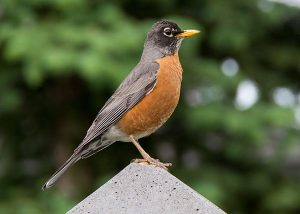
The American Robin is a migratory bird meaning they travel to different parts of the country depending on the season. In the spring and summer, they are common backyard birds in Colorado. You are likely to see them in your backyard eating insects and fruit. In the fall and winter, they migrate to the south to escape the cold weather.
Male and female American Robins look different from each other. Male robins have orange breasts, while female robins have grayish-brown breasts. Male robins also tend to be larger than the females.
23. House Sparrow

House sparrows are common birds that can be found all over the United States.
These birds are small, with a body length of about five inches. They have a brownish-gray coloration, and their wings are brown and white.
House sparrows are not migratory birds, but they do move around in search of food. These birds eat seeds, insects, and other small invertebrates.
They build their nests in trees, bushes, and on buildings. House sparrows are not endangered, but their populations have declined in recent years due to habitat loss and pesticide use.
These little birds are fun to watch as they go about their daily activities. You can help house sparrow populations by providing them with a safe place to nest and by planting native plants that provide food for them.
24. Song Sparrow

The Song Sparrow is a common bird found in backyards across Colorado. As their name suggests, these sparrows are known for their beautiful song, which they use to attract mates and ward off predators.
Song Sparrows typically migrate south in the winter, but some may stay put if there is enough food available. These birds eat mostly insects, but will also consume seeds and berries. In terms of habitat, Song Sparrows prefer open areas with some bushes or trees nearby. This provides them with places to hide from predators and build their nests.
The Song Sparrow is a medium-sized bird with streaked brown upperparts and whitish underparts. The male has a gray breast and head, while the female generally has duller colors. Both sexes have a reddish-brown mark on their throats called a “throat patch.” This patch is larger in males and is used to attract mates. Male Song Sparrows also have a dark brown streak on their heads that is not present in females. This streak is used to intimidate other males during the breeding season. Male Song Sparrows also tend to be larger than females.
The two sexes sing different songs, with male songs being longer and more complex. Male song sparrows also sing more often than females, which is how they attract mates. Females usually only sing when they are defending their territory or attracting a mate.
25. White-crowned Sparrow
The White-crowned Sparrow is a migratory bird that can be found in Colorado from late April to early October. These sparrows breed in the western United States and Canada, and their diet consists mostly of insects.
White-crowned Sparrows are typically brown with white stripes on their heads. The males and females of this species look very similar, but there are a few ways to tell them apart. Male white-crowned sparrows have brighter plumage than the females, and their white stripes are more pronounced. The male also has a higher-pitched song than the female.
White-crowned Sparrows are granivores, which means that their diet consists mostly of seeds. In the wild, they eat a variety of different types of seeds, but in suburban and urban areas, they will often eat birdseed from feeders. They also eat insects, especially when they are feeding their young.
26. European Starlings

European starlings are common backyard birds in Colorado. European starlings migrating through the state can be seen in flocks of hundreds or even thousands of birds flying together in formation. These birds eat insects, berries, and fruits. You may see them eating bugs in your garden or picking berries from bushes.
European starlings are also known for their mimicry, and can imitate the sounds of other birds and animals.
They are small birds with black feathers, a short tail, and pointed wings. Their beaks are yellow with a black tip, and their eyes are dark brown. At a distance, starlings appear black. In summer, they turn an iridescent purplish-green with yellow beaks; in winter their plumage is brown, covered in brilliant white spots.
In flight their wings are short and pointed, giving them a star-like appearance, and hence the name “starling”.
27. Spotted Towhee
This bird is a year-round resident in Colorado. It can be found in the mountains, foothills, and front range. The Spotted Towhee prefers brushy areas with thick cover. Diet consists of mostly insects but also eat some fruits and seeds. Look for this bird scratching the ground for food or perched on a low branch surveying its surroundings.
The Spotted Towhee is dark brown with black streaks on its back and has a white belly. The wings are brown with white spots. The tail is long and black with white stripes. The bill is black and the legs are pink. The female Spotted Towhee is similar to the male but has no spots on its wings.
They breed in open woods and brushy areas in western North America. It nests in trees or shrubs, laying four to six eggs. The diet of this bird consists of insects, berries, and seeds.
28. Yellow Warbler
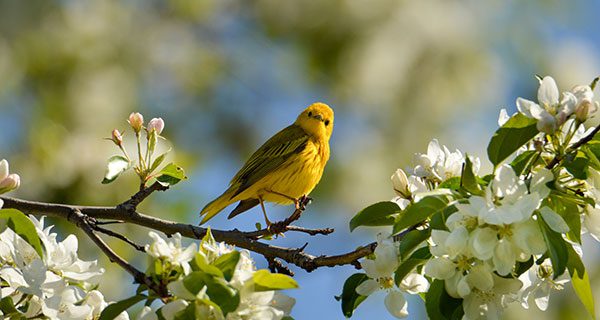
Yellow warblers are little songbirds are most often seen and heard in the spring and summer, when they arrive to nest and raise their young in Colorado.
They eat mostly insects, making them a valuable ally in keeping your garden pest-free. You can attract Yellow Warblers to your yard by providing a water source and planting native shrubs and trees.
Male and female Yellow Warblers look quite different from each other. The males have bright yellow feathers all over their bodies, while the females are more muted in color, with greenish-yellow feathers on their backs and pale yellow feathers on their bellies. Both sexes have a white breast with black streaks running down it. Male yellow warblers also have a black “mask” around their eyes.
29. Cedar Waxwing

Cedar Waxwings are a migratory species, meaning they travel to different parts of the state at different times of the year.
They are known for their diet of fruit and berries. In Colorado, they can be found eating mountain ash berries, serviceberries, and juniper berries. Cedar waxwings are also attracted to suet feeders. If you see a cedar waxwing in your backyard, it’s likely because there is a food source nearby that they’re interested in.
Cedar waxwings are a sexually dimorphic species, meaning there are visible physical differences between males and females. The most notable difference is the color of their plumage. Male cedar waxwings have gray feathers with black wingtips and a red band on their tail. Female cedar waxwings have brown feathers with black wingtips and a red band on their tail. Another difference between males and females is the size of their beaks. Male cedar waxwings have larger beaks than females.
30. Downy Woodpecker
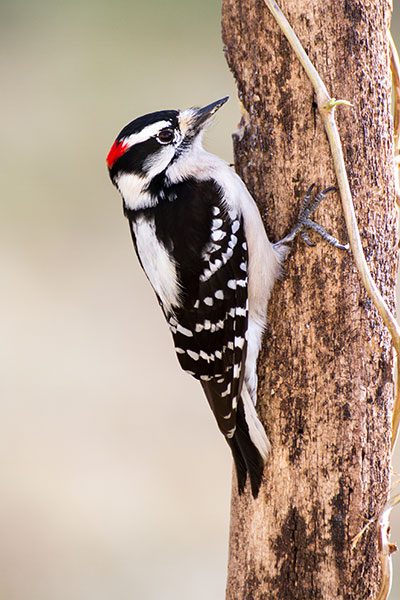
The Downy Woodpecker is the smallest member of the woodpecker family. These birds are found in forests across North America.
They are about six inches long with a small bill and a black and white striped back. The males have a red patch on their head.
Downy woodpeckers eat mostly insects. They will also eat berries and nuts in the winter. You can attract them to your backyard by putting out a bird feeder with sunflower seeds or suet.
These birds are year-round residents in Colorado. However, they may migrate to lower elevations in the winter. So, if you live in the mountains, you may only see them during the summer months.
31. Hairy Woodpecker
The Hairy Woodpecker is a medium-sized woodpecker found throughout most of North America. In Colorado, they are year-round residents in the mountains and can be found in the foothills and plains during the summer months. They are most often seen feeding on insects, but will also eat berries and nuts.
These birds are easily recognized by their black and white plumage, as well as their long bill. The male Hairy Woodpecker has a red patch on the back of its head, while the female does not.
Hairy Woodpeckers are known to be aggressive birds, and will often chase other birds away from their territory.
These birds mate for life and typically nest in tree cavities.
Conclusion
Birdwatching is a popular hobby worldwide. The North American region has the most bird species out of any other continent in the world.
Each year, nearly a billion people participate in this hobby worldwide, and for many birdwatching enthusiasts, backyard birding has become the best way to experience all that nature has to offer.
Colorado backyard birds bring nature to your doorstep.
FAQ
What can I do to encourage wild birds in my yard?
In order to encourage wild birds in your backyard, you must provide a source of water and food. This can be done with bird baths and bird feeders. For a more natural experience, try adding some flowers or plants around your yard to attract different species of birds. Indigenous plants are the best types of plants to attract local insects and birds to your garden.
Bird feeders are different for different types of birds. A bird feeding station will typically have a specific type of food to attract a specific type of bird. Some general ideas are sunflower seeds, suet, and fruit. While special hummingbird feeders can also be made to attract these fascinating little birds to your garden too.
How do I identify the birds around my backyard in Colorado?
The best way to identify the birds in your backyard is by looking at the coloration of their feathers and the size of the bird. Their beaks tell you what they like to eat. Their feet tell you if they perch, hop or wade.
Are woodpeckers endangered?
Woodpeckers are classified as being at-risk. The main reason for this decrease is the loss of nesting sites due to deforestation, development and expanding agriculture.
Why might there be lots of small birds flying and diving?
It is possible that the birds are looking for food such as flying insects or there could be a predator nearby. Without further observations it is impossible to know what is driving their behavior.
What kind of blackbirds seem to congregate on power lines?
Blackbirds are a common sight at power lines, but why? Scientists believe that the blackbirds congregate at these power lines because this is an excellent place to find food. The electricity can kill bugs, which the blackbirds can easily feed on.
What does “passerine” mean?
Passerines are a group of birds that include more than half of all the bird species, like songbirds. They prey primarily on insects and are also known as perching birds.