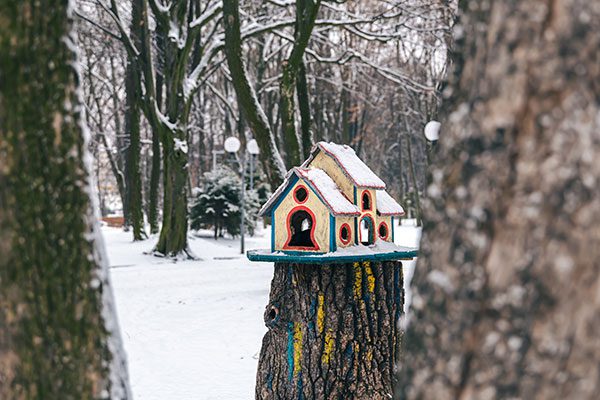
Are you interested in birdwatching? Do you need some guidance on where to start or what equipment or gear you need to make it a more formal hobby? This guide will help you determine some of the essential equipment and gear you will need for getting started and embarking on the journey of birdwatching.

Birdwatching Equipment
1. Binoculars

A good pair of binoculars is an essential piece of equipment for any birder, whether you are a beginner birdwatcher or a seasoned birdwatcher. Binoculars allow you to get a closer look at birds that are far away without startling them or intruding upon their territory. They can also help you to identify birds that you might not be able to see clearly with the naked eye.
There is a wide range of binoculars available on the market, from small and compact models that are easy to carry around, to larger models that provide greater magnification to enable you to zoom in better. There are also binoculars that are specifically designed for birdwatching, these often have special features such as claw marks or hand grips that make it easier to hold them.
When looking for a pair of binoculars, it is good to keep in mind that they should be lightweight and easy to carry, especially if you are hiking a good distance to view the birds. They should also have a decent magnification power. However, you don’t need to break the bank in order to buy a pair of binoculars – even the cheapest ones will do the job just fine, especially when you are just starting out.
There are a few things you need to consider when purchasing binoculars for birdwatching:
- Magnification: this should typically be between 7 and 10 power.
- The objective lens size: this is measured in millimeters. A larger objective lens will allow you to see more light, making it easier to spot birds in low-light conditions.
- The field of view: this is the width of the area you can see through the binoculars. A wider field of view makes it easier to find and follow birds in flight.
- Durability: When choosing binoculars for birdwatching, remember that you will be spending a lot of time outdoors in all types of weather conditions. Therefore, it is important to choose a pair that is durable and easy to hold. Look for binoculars that are waterproof and fog-proof, and that have rubberized coating to protect them from bumps and scrapes.
- Comfort: It is also important to choose a pair of binoculars that are comfortable to hold for long periods of time. This means finding a pair that is the right weight and size for you. Another feature for comfort is twist-up eyecups to make them easy to use (not a must, but definitely more comfortable).
On either end of the affordable price range, here are two binoculars available from amazon.com that will work well for birdwatching.
- The occer 12×25 is a great option for birders of all levels. It is also the best seller and at an affordable price.
- For the serious birdwatcher, Celestron – Nature DX 8×42 Binoculars are great outdoors and birdwatching binoculars. They are fully multi-coated with BaK-4 Prisms. They have a rubber coating to prevent them from damage should they be knocked, scratched or dropped, and they are fog proof and waterproof.
2. Field guide
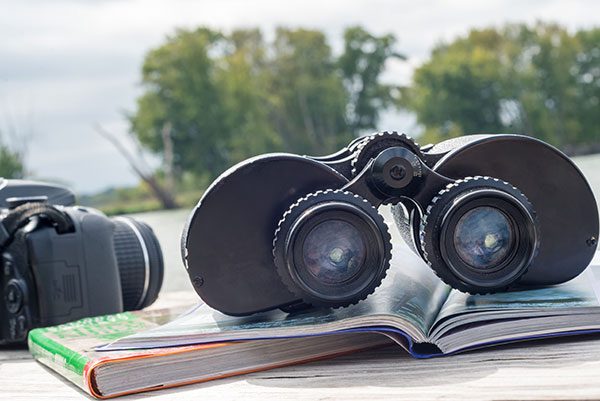
A field guide is another essential piece of equipment for birders, even seasoned birders take their field guides along with them to look up rare birds or species that they may be unfamiliar with. Field guides can help you identify the different birds you see, and they also provide information on the habitat, behavior, and songs of different species of birds.
There are many different field guides available. However, it is important to choose a guide that specifically covers the area where you live or where you’ll be doing most of your birdwatching.
- Sibley Guide to Birds: The best field guide for bird watchers in the USA is the Sibley Guide to Birds. It covers all of the birds in North America and is full of detailed illustrations and information on each species.
- National Audubon Society Filed Guide: Another great option for birdwatchers in the USA is the National Audubon Society Field Guide to North American Birds. This guide is slightly smaller than the Sibley Guide and focuses on the most common birds found in North America.
- The Golden Field Guide to Birds of North America: For bird watchers who want a more compact guide, The Golden Field Guide to Birds of North America is a good choice. This guide includes information on over 800 species of birds found in North America.
However, these field guides can be heavy, especially if you are walking or hiking to a particular area to do birdwatching. We therefore suggest that you find a more specific or compact guide related to the region or area where you will be doing your birdwatching as it would be lighter to carry and still give you most of the information you will need.
3. Spotting scope
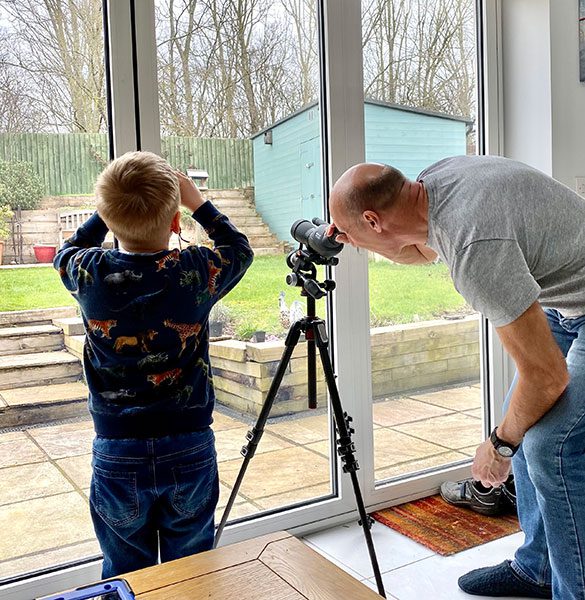
A spotting scope is a telescope-like device that allows you to get an even closer look at birds than binoculars do. Spotting scopes are particularly useful for identifying rare or hard-to-find species of birds. If you’re serious about birdwatching, investing in a good spotting scope can be a wise decision.
There are a range of spotting scopes available through amazon.com. Here are two options, keep in mind however, that you may find a different scope that you prefer, so this is just a guide.
- 360 Tactical 15-40x50mm Zoom Prism Spotting Scope: This is a good starter scope and comes with a tripod stand. It has a 15-40x50mm zoom prism spotting scope and features a Mil-Dot crosshair reticule with red and green Illumination for better sighting in low-light conditions. It also has a twist-up eyecup for easier viewing and can be used with or without glasses.
- The Celestron – Ultima 80 Angled Spotting Scope: This has a 20-60x Zoom Eyepiece with
multi-coated optics for bright and clear birdwatching. It too comes with a tripod, as well as a carrying case The Celestron Ultima 80 is a great option for birdwatchers who are looking for an affordable, all-inclusive spotter. It is waterproof and nitrogen-purged, which makes it resistant to fogging in extreme temperatures.
4. Phone

Believe it or not, your phone can be a valuable tool for birdwatching! There are many different apps available that can help you identify the birds you see, as well as record your sightings and share them with other birders. Your GPS on your phone can also help you to track bird watching sites or verify exactly where you have seen a rare species. Your phone can also double up as a camera for birds that are within close range. And last but not least, you can also record bird calls to identify later if you are not sure of which bird the call belongs to.
Some of our favorite apps for birding include:
- iBird Pro
- Audubon Birds Pro
- eBird Mobile
5. Camera

If you want to take things one step further, consider investing in a camera specifically for taking pictures of birds. A good birding camera will have a long zoom lens that allows you to get close-up shots without disturbing the birds themselves. You can also find cameras with special features like night vision modes and built-in GPS capabilities that can be helpful for tracking down rare species of birds.
6. Notebook
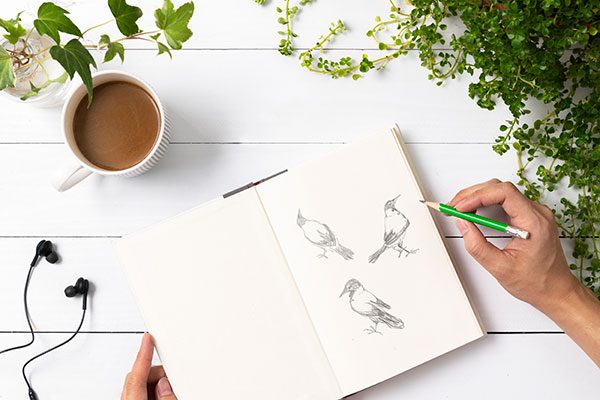
Keeping track of your sightings in a notebook is always a good idea, especially if you’re trying to spot a particular species or earn a certain badge on an app like eBird Mobile. Notebooks are also helpful for recording the date, time, and location of your sightings, as well as any other important details about the bird itself (e.g., coloration, size, distinguishing marks).
If you have an artistic flair, you may want to make quick sketches of the birds you see or study a bird that is nearby. I have an artist friend who always takes a nature journal with her, along with her watercolour paint pad to capture the images she sees in nature.
7. Gadgets
Finally, there are several gadgets out there that can make your birdwatching experience even more enjoyable. For example, there are special devices called “bird calls” that imitate the sounds made by different species of birds; these can be useful for drawing birds closer so that you can get a better look at them. However, it is important to do so with caution as bird calls carry messages and one does not want to lure birds into a place that could potentially be harmful to them. Other gadget options include binocular straps (to help relieve neck strain), camouflage clothing (to help you blend in with your surroundings), and hat clips (to keep your binoculars within easy reach). A tripod for your camera is also a handy gadget to have especially if you will be standing and taking a good number of photos.
Birdwatching Gear
In birdwatching, as with any outdoor activity, it is important to wear the right clothing. The right clothing will protect you from the elements and help you blend in with your surroundings. For example, if you are birdwatching in a wooded area, wearing camouflage clothing will help you stay hidden from the birds. Wearing bright colors will make you more visible to birds and could scare them off.
The type of clothing you wear will also depend on the weather. If it is cold outside, you will need to dress warmly to avoid hypothermia. If it is hot out, light-colored clothing will help keep you cool.
Wearing the right footwear is also important. You will be doing a lot of walking, so comfortable shoes are necessary. Shoes with good traction will also help you keep your footing on uneven terrain.
As you can see, there is a lot of essential gear and equipment for birdwatching. This is just a basic list to get you started. As you become more experienced, you may find that you need other items as well.
1. Backpack

A birdwatching backpack should be strong but lightweight and have enough space to comfortably carry all of your gear and equipment. It will help to free your arms to be able to walk, climb or even lie down to observe birds discreetly without having to remove it. Keep to dark or muted colours as bright colours will scare away birds.
2. Clothing
Dress according to the climate in which you will be birdwatching. Wearing layers is helpful as you can remove the top layers one by one as the day warms up and replace the layers again as the weather cools down.
Colours that help you to blend in with the surrounding countryside are always a good choice. Anything makes you conspicuous will alert the birds to possible danger.
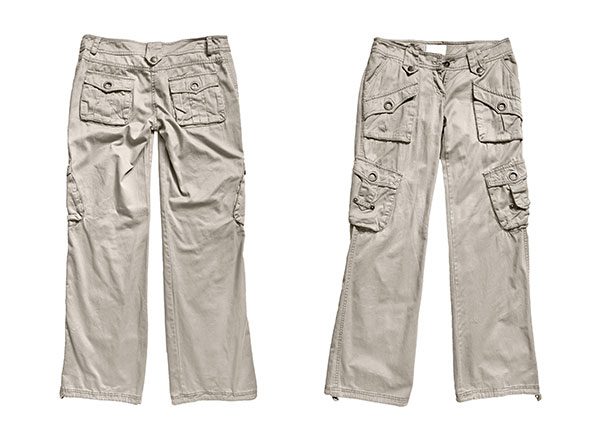
- Pants: Long pants are essential for comfort when birding. In summer, you will need a lighter fabric and there are some pants that come with zippers in the legs, to double up as long pants or shorts. In winter, warm track pants or jeans are a good option. Another excellent option is cargo pants with pockets to store all your gadgets you need for birding. Skirts and dresses are not good choices for birding.
- Shirts: Cotton shirts are good for breathability. T-shirts and skivvies are perfect for birding. You can layer these with a singlet underneath and a turtleneck jumper is good to keep you warm when it becomes cold. Layering helps you to be warm in the morning and then cool off as the sun becomes warmer through the day.
- Utility Vest: A vest or sleeveless jacket/waistcoat is not essential, but it will provide added warmth to your body. If it has pockets they will be useful for storing gadgets and other paraphernalia you may need to take along on your outing, such as your keys, bird guides, your phone, wallet etc.
- Jacket: A jacket is an essential item of clothing that you will need when birding. The weather can change in an instant and it is better to go prepared and not need to use the jacket than to go unprepared and get soaked or end up ill. A light rain jacket can be easily stored in your backpack. It will protect you from rain and also serve as an extra layer to stay warm when the weather turns cold.

If you are going to be birding in an area that experiences extreme cold, then a more sturdy jacket will be essential.
Note: We do not recommend that you take an umbrella with you when you go birding. Firstly, they can be bulky. Secondly, they are also impractical, as you will not have your hands free to use your camera or binoculars. And, if it is windy the umbrella will not be useful at all.
3. Headgear
- Headgear for day: During the daytime, a sun hat with a brim will help keep the sun out of your eyes. Most hats work well as long as they offer protection to your neck and ears (if you are lying on your stomach looking through binoculars, your neck will be exposed to the sun). Hats made from cotton or cotton/nylon blend are good to use as they can easily be rolled up and put away in your backpack when you do not need them. Make sure that your hat has a string that can be easily secured under your chin if it is windy.

- Headgear for night: If you’ll be birdwatching at night, you’ll need a headlamp or flashlight to help you see in the dark. You could also wear a beanie if it is cold.

4. Foot gear
- Shoes: You won’t generally need hiking boots, unless you are hiking to a specific spot to watch bald eagles and other out of reach places. Good supportive, enclosed, comfortable walking shoes are very important for birdwatching. Make sure that they are worn in, as you do not want to have to bother with blisters and miss out on spotting the birds. Closed shoes will also protect you from spiky plants and other creepy crawlies of the featherless and unwinged kind that you may come across.
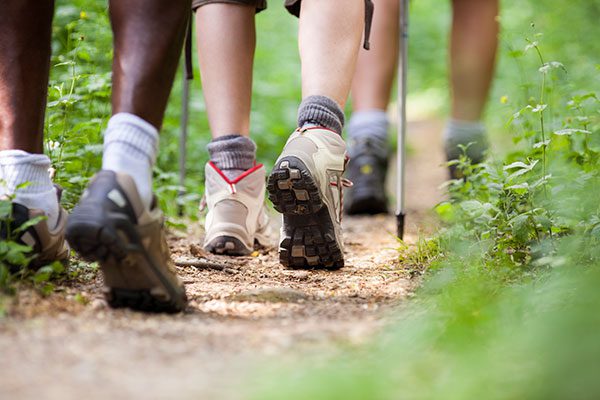
If you are birding in wetlands or around other bodies of water, you may want to consider shoes that are watertight or take along some water boots.
- Socks: For winter, some thermal insulated socks will keep your feet warm. Always pack a spare pair of socks in your backpack. In summer, lightweight cotton socks are good for breathability, and don’t forget to pack in that extra pair in case of an emergency.
5. Water Bottle
Water bottle and container: It’s important to stay hydrated when you’re birdwatching, so make sure to bring along a water bottle and a container to refill it from if necessary.
6. Snacks and food
Pack some snacks and lunch to keep your energy up while you’re out birdwatching.
7. First-Aid Kit
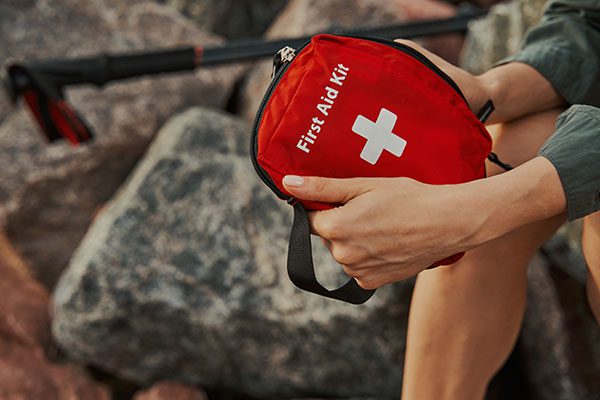
A basic first aid kit is an essential part of your gear. You can purchase these kits at a drugstore or a camping shop.
Conclusion:
As you can see, there is quite a bit of equipment and gear involved if you are serious about birdwatching! However, don’t let this discourage you from getting started. Birdwatching is a fun and rewarding hobby that anyone can enjoy with just a little bit of preparation. To get started, all you really need is a pair of binoculars and a good field guide; everything else is optional but can be helpful depending on your specific objectives and goals. So, what are you waiting for? Get out there and start exploring the world of birds! Happy birdwatching!
FAQ
What are the benefits of using a spotting scope?
A spotting scope is a great tool for birdwatching because it allows you to observe birds at a distance without disturbing them.
What is the best device for bird watching?
Different birders have different preferences. Some people prefer to use binoculars, while others use spotting scopes. Both devices have their own pros and cons. Binoculars are typically lighter and more portable than telescopes and they also have a wider field of view, making it easier to spot birds. However, they typically have lower magnification than telescopes.
Spotting scopes have higher magnification than binoculars, making them better for seeing details on birds. They have a narrower field of view, making it easier to focus on a specific bird. However, scopes tend to be heavier than binoculars and are more difficult to carry around than binoculars.
What is a birdwatcher called?
A birdwatcher is also called a birder.
What is the best time of day to go birdwatching?
This will depend on the types of birds you are hoping to spot. The best time of day to go birdwatching is early in the morning, before the sun gets too high in the sky. Another time to go birding is at dusk when the birds are making final preparations for the night. However, if you are specifically looking for birds that are nocturnal, you will need to be prepared to do some night-time birding.
Where are some good places to go birdwatching?
There are many good places to go birdwatching, but some of the best include national parks, state parks, and bird sanctuaries.
How can I attract birds to my backyard?
There are a few things you can do to attract birds to your backyard, including:
- Put out bird feeders and fill them with bird seed.
- Put out bird houses or nesting boxes.
- Plant trees and shrubs that produce berries or fruits that birds like to eat.